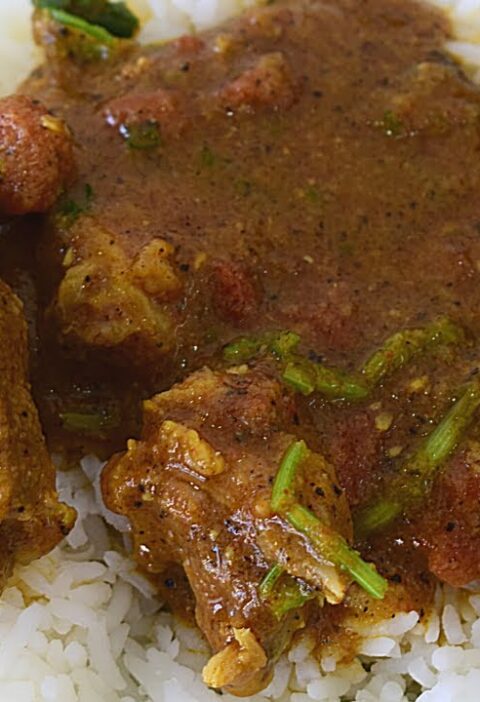
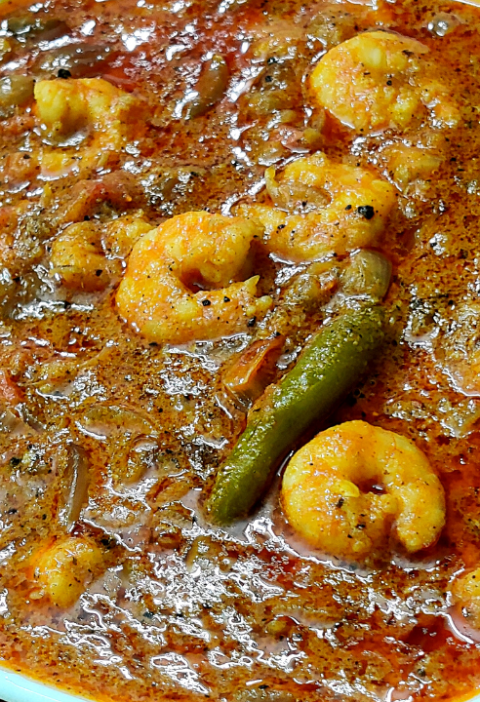
Crab curry is one of the most flavorful and aromatic seafood dishes loved across coastal regions. In South India, especially in Tamil Nadu and Kerala, it is a traditional dish that combines fresh crab with bold spices, coconut, and aromatic herbs to create a rich and delicious gravy.
This authentic recipe is simple to prepare yet incredibly satisfying. The dish features freshly ground spices, coconut paste, and a perfect blend of traditional ingredients, creating a deep and complex flavor profile. Every spoonful delivers the sweetness of crab meat, combined with spicy, aromatic curry gravy.
If you love seafood recipes, this will quickly become one of your favorites. It pairs beautifully with steamed rice, dosa, idiyappam, or even soft chapati. The thick, spicy gravy and tender crab meat make it a perfect comfort meal for family lunches or weekend dinners.
Another reason this recipe stands out is the homemade curry paste. Instead of using store-bought masala powders, the spices are freshly sautéed and ground to create a fragrant paste that elevates the dish to restaurant-quality flavor.
This recipe is ideal for beginners and experienced cooks alike because it uses simple ingredients while delivering authentic taste. If you are searching for the best homemade crab curry recipe, this guide will walk you through every step.
Let’s begin by preparing the ingredients needed for this delicious seafood curry.
What Makes This Crab Curry Special
Crab curry is a dish that stands out because of its bold flavors, rich texture, and comforting aroma. Unlike many other seafood recipes, crab curry develops a deep taste when cooked with freshly ground spices and coconut paste.
One of the key highlights of this recipe is the homemade curry paste. The combination of fennel seeds, pepper, cumin, cloves, and coconut creates a strong aromatic base that gives the curry its authentic taste. When these spices are sautéed and ground together, they release essential oils that enhance the flavor of the gravy.
Another factor that makes this crab curry unique is the balance between spice and sweetness. Fresh crab meat has a naturally sweet flavor, and when it cooks in a spicy masala, the contrast creates an incredibly satisfying dish.
The use of gingelly oil in the recipe also contributes to the traditional South Indian taste. Gingelly oil has a rich, nutty aroma that complements seafood curries beautifully.
This crab curry recipe is also versatile. You can adjust the spice level, thickness of the gravy, or even add additional ingredients to customize the dish according to your taste preferences.
For seafood lovers, this recipe offers the perfect combination of spicy, savory, and slightly sweet flavors, making it a must-try dish.
How to Choose the Best Crab
Choosing the right crab plays a huge role in the taste of the final dish. Fresh crab always produces the most flavorful curry.
- When buying crab, look for crabs that feel heavy for their size. This usually means they contain more meat. The shell should also look shiny and intact.
- Live crabs are the best option because they guarantee freshness. However, if live crabs are not available, you can also use cleaned raw crab pieces from a trusted seafood market.
- Another important factor is the type of crab. Mud crabs are commonly used in South Indian crab curry recipes because they contain more meat and have a stronger flavor. Blue swimmer crabs are also a popular choice for curry because they cook quickly and taste delicious.
- Avoid crabs that have a strong fishy smell or dull shells, as these may not be fresh.
- Proper cleaning is also essential. Remove the shell, gills, and internal parts before cooking. Wash the crab thoroughly to remove sand or impurities.
Using fresh and properly cleaned crab ensures the curry turns out delicious and safe to eat.
How to Clean a Crab Properly Before Cooking
Cleaning the crab properly is very important before preparing crab curry. If not cleaned well, the curry may contain sand or unwanted parts.
- Start by rinsing the crab under running water. If the crab is whole, remove the top shell carefully.
- Next, remove the gills, which are the feathery parts located on the sides of the crab. These parts are not edible and should be discarded.
- Then remove the internal organs and wash the crab thoroughly.
- After cleaning, cut the crab into medium pieces using a sharp knife or cleaver. This helps the curry masala penetrate the crab meat during cooking.
- Some people also lightly crush the crab claws. This allows the gravy to enter inside and enhances the flavor.
- Once cleaned and cut, rinse the crab pieces again and keep them ready for cooking.
Properly cleaned crab ensures a fresh and tasty curry.
How to Store and Reheat Crab Curry
Crab curry can be stored and enjoyed later if handled properly.
- Allow the curry to cool completely before storing it in the refrigerator. Place it in an airtight container to maintain freshness.
- Crab curry can typically be stored for up to two days in the refrigerator.
- When reheating, transfer the curry to a pan and heat it on a low flame. Add a small amount of water if the gravy becomes too thick.
- Avoid reheating crab curry multiple times because seafood can lose its flavor and texture.
- For the best taste, it is recommended to consume crab curry fresh on the same day it is cooked.
Why Homemade Crab Curry is Better Than Restaurant Versions
Many people enjoy ordering crab curry in restaurants, but preparing it at home offers several advantages.
- First, homemade crab curry allows you to control the ingredients. You can adjust the spice level, salt, and oil according to your preference.
- Second, homemade curry paste creates a fresher and more aromatic flavor compared to packaged masala powders used in some restaurants.
Cooking at home also ensures the seafood is fresh and properly cleaned.
Another advantage is portion size. Crab dishes in restaurants can be expensive and served in small quantities, while cooking at home allows you to prepare enough for the entire family.
Finally, homemade crab curry provides a more authentic and comforting experience, especially when served with freshly cooked rice.
Crab Curry
Description
This authentic South Indian crab curry recipe is a flavorful seafood dish made with fresh crab, aromatic spices, coconut paste, and traditional ingredients. The curry has a rich, spicy gravy that perfectly complements steamed rice or dosa. Prepared with freshly ground masala, this homemade crab curry delivers bold flavors and a delicious coastal taste that seafood lovers will enjoy.
Ingredients
For the Curry Paste
For the Crab Curry
Instructions
- Prepare the Curry Paste
Heat oil in a pan over medium heat.
Add the anise, cloves, fennel seeds, pepper, and cumin seeds. Let them sauté for a few seconds until aromatic.
Now add the small onions and sauté until they become slightly soft and translucent.
Add chopped tomato, garlic, ginger, and green chillies. Continue sautéing until the tomatoes soften, and everything turns aromatic.
Next, add the coconut pieces and sauté the mixture for another 2 minutes.
Once all the ingredients are well sautéed and fragrant, switch off the heat and allow the mixture to cool slightly. Transfer the mixture into a blender, add some water, and grind it into a smooth paste. Set the curry paste aside.
- Prepare the Curry Base
Take a clean pan and heat 3 tablespoons of oil along with 1 tablespoon of gingelly oil.
Add cumin seeds and allow them to splutter.
Now add chopped onions and sauté them until they turn golden brown. This step helps build the flavor base of the curry.
Add chopped tomatoes and cook until they become soft and mushy.
Next, add ginger garlic paste and curry leaves. Sauté everything for about 2 minutes until the raw smell disappears.
- Add the Spice Powders
Add coriander powder, chilli powder, turmeric powder, and salt.
Mix everything well so the spices combine evenly with the onion and tomato mixture.
Add a little water and close the pan with a lid. Let it cook for about 2 minutes so the spices release their aroma.
- Add the Ground Curry Paste
After 2 minutes, add the freshly ground curry paste to the pan.
Add 1 cup of water and mix everything thoroughly.
Allow the curry to cook for about 2 minutes so the flavors combine well.

- Add the Crab
Now add the cleaned crab pieces into the curry.
Mix gently so the crab is coated with the masala.
Add chopped coriander leaves and close the pan with a lid.
Let the crab curry cook for about 10 minutes.
Make sure to stir the curry every 3–4 minutes so the gravy does not stick to the pan.
Once the crab is cooked and the gravy thickens, turn off the heat.
Your delicious homemade crab curry is ready to serve.
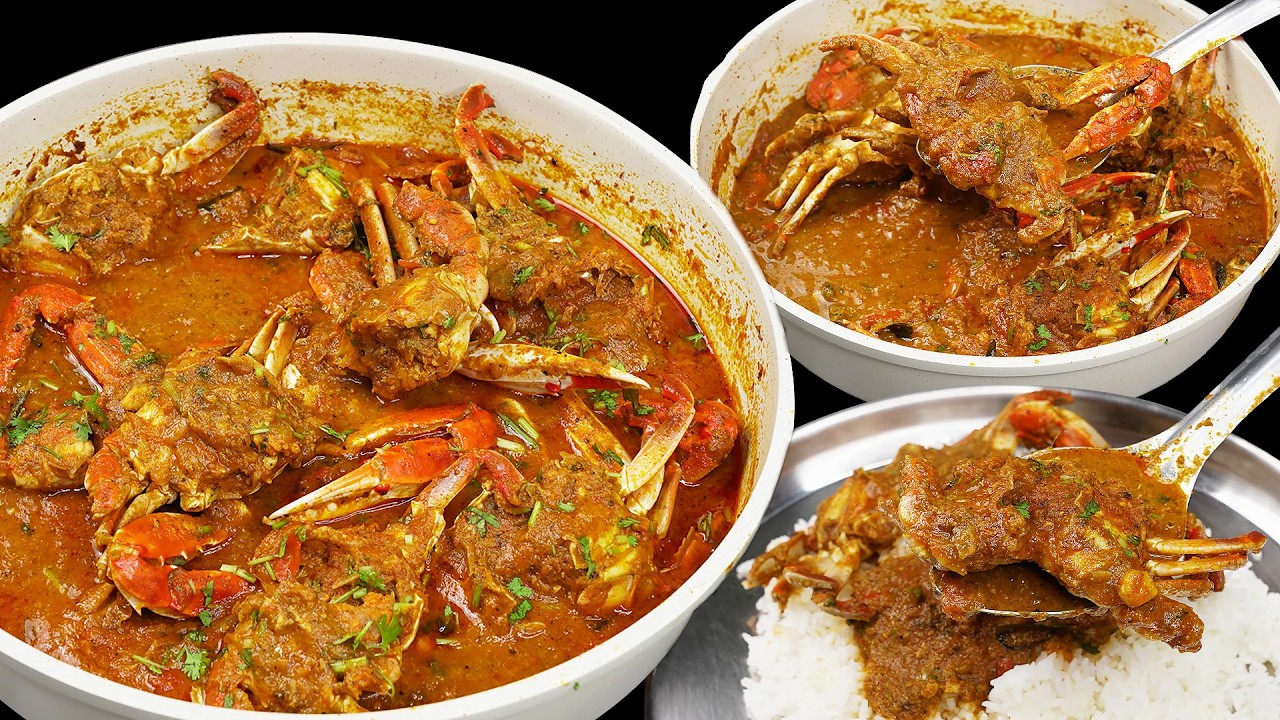
Variations of Crab Curry
1. Coconut Milk Crab Curry
Instead of grinding coconut pieces, you can add coconut milk to the curry. This creates a smoother and creamier gravy with mild sweetness.
2. Kerala Style Crab Curry
Kerala-style crab curry includes roasted coconut paste and curry leaves, giving the dish a deeper roasted flavor.
3. Chettinad Crab Curry
This version uses more pepper, fennel, and traditional Chettinad spices for a bold and spicy flavor.
4. Tomato-Based Crab Curry
If you prefer tangy gravy, increase the quantity of tomatoes and reduce the coconut slightly.
5. Dry Crab Masala
Cook the curry longer until the gravy thickens and becomes a semi-dry masala coating the crab pieces.
Health Benefits of Crab
Crab is not only delicious but also highly nutritious. It provides several health benefits when consumed in moderation.
Rich in Protein
Crab meat is an excellent source of high-quality protein, which helps build and repair body tissues.
Low in Calories
Compared to many other meats, crab contains fewer calories, making it a great option for a balanced diet.
Supports Heart Health
Crab contains omega-3 fatty acids that help improve heart health and reduce inflammation.
Boosts Immunity
The minerals in crab, such as zinc and selenium, help strengthen the immune system.
Good for Brain Function
Omega-3 fatty acids in seafood support brain development and cognitive function.
Rich in Vitamins
Crab contains vitamins like Vitamin B12 that support energy production and nervous system health.
Cooking Tips for Perfect Curry
Use Fresh Crab
Fresh crab always gives the best flavor. Frozen crab can also be used, but fresh seafood enhances the taste significantly.
Clean the Crab Properly
Always wash and clean the crab thoroughly to remove any sand or impurities.
Do Not Overcook Crab
Crab cooks quickly. Overcooking can make the meat tough.
Use Gingelly Oil
Gingelly oil (sesame oil) adds an authentic South Indian flavor to the curry.
Adjust Spice Level
You can increase or reduce the number of green chillies and chilli powder according to your spice preference.
Grind Smooth Paste
Ensure the curry paste is smooth for a rich and creamy gravy.
Cook on Medium Flame
Cooking on medium heat helps the spices release their full flavor.
Rest Before Serving
Allow the curry to rest for 5 minutes after cooking. This helps the flavors blend better.
Expert Tips to Enhance the Flavor of Crab Curry
Professional chefs often use small tricks to make seafood curries taste even better.
- One tip is to lightly crush the crab claws before cooking so the masala enters the shell.
- Adding freshly ground pepper near the end of cooking can enhance the flavor.
- Some cooks also add a small amount of coconut oil or gingelly oil on top before serving to boost the aroma.
- Using freshly ground spice paste instead of ready-made masala also makes a huge difference.
- Finally, allowing the curry to rest for a few minutes after cooking helps the flavors blend perfectly.
These small tips can transform a simple curry into a restaurant-quality dish.
Best Occasions to Serve Crab Curry
Crab curry is a special dish that works well for many occasions.
- It is perfect for weekend family lunches when everyone can sit together and enjoy a hearty meal.
- Many coastal households also prepare this recipe during festive gatherings or celebrations.
- Seafood lovers often enjoy it as a special treat when fresh crab is available in the market.
- The dish is also ideal for dinner parties where you want to serve something unique and flavorful.
- Because of its rich taste and aromatic spices, this often becomes the highlight of the meal.
Crab curry is a flavorful seafood dish that brings together the richness of fresh crab, aromatic spices, and coconut to create a comforting and satisfying meal. This authentic South Indian crab curry recipe is simple, delicious, and perfect for seafood lovers.
The freshly ground curry paste gives the dish its signature depth of flavor, while the blend of spices and herbs enhances the natural sweetness of crab meat. Whether you are preparing it for a weekend family lunch or a special occasion, this recipe is guaranteed to impress.
With the right ingredients, proper cooking technique, and a few helpful tips, anyone can prepare restaurant-style crab curry at home. Serve it hot with steamed rice and enjoy the incredible taste of homemade seafood curry.
Try this recipe today and experience the rich flavors of traditional crab curry in your own kitchen.
Frequently Asked Questions (FAQs)
1. How do I know when the crab is cooked?
Crab shells turn bright orange or red when fully cooked. The meat inside also becomes firm and opaque.
2. Can I use frozen crab for this recipe?
Yes, frozen crab can be used. Make sure to thaw it completely before cooking.
3. How spicy is this crab curry?
This recipe has moderate spice. You can adjust the spice level by reducing green chillies or chilli powder.
4. Can I store crab curry?
Yes. can be stored in the refrigerator for up to 2 days in an airtight container.
5. Can I make this curry without coconut?
Yes, but coconut adds thickness and flavor to the curry. Without it, the gravy will be lighter.
6. Is crab curry healthy?
Yes, it is healthy when prepared with fresh ingredients and moderate oil.
7. Why is my crab curry watery?
This usually happens if too much water is added. Simmer the curry longer to thicken the gravy.
8. Can I add tamarind to this recipe?
Yes, a small amount of tamarind can be added for tanginess if preferred.