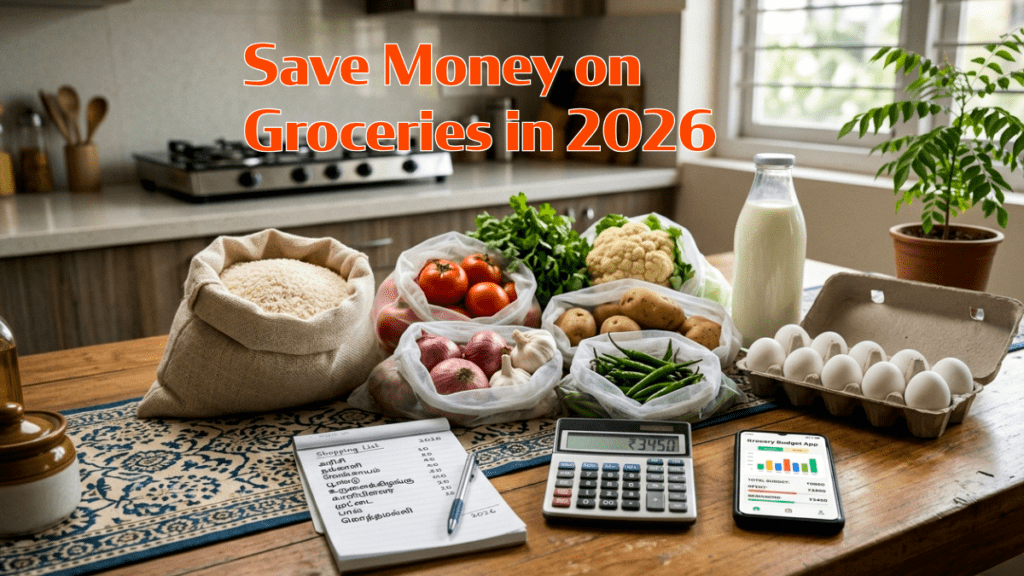
Grocery prices in 2026 remain one of the biggest pressure points in household budgets. Food inflation has slowed in some regions, but prices are still higher than pre-2020 levels. Staples like rice, eggs, milk, cooking oil, and vegetables fluctuate weekly. Delivery apps add convenience, but they also add hidden costs. Retailers now use dynamic pricing, AI-based promotions, and loyalty personalisation. If you shop the same way you did a few years ago, you are likely overspending.
You can still cut your grocery bill by 20 to 40 per cent. The key is to combine price tracking, store strategy, meal planning, and smarter buying habits. This guide breaks down exactly how to do that. You will get practical steps, real examples, trending techniques, and budget-friendly recipes. Every section focuses on what you can apply today.
Why Groceries Cost More in 2026
Understanding the drivers helps you avoid traps.
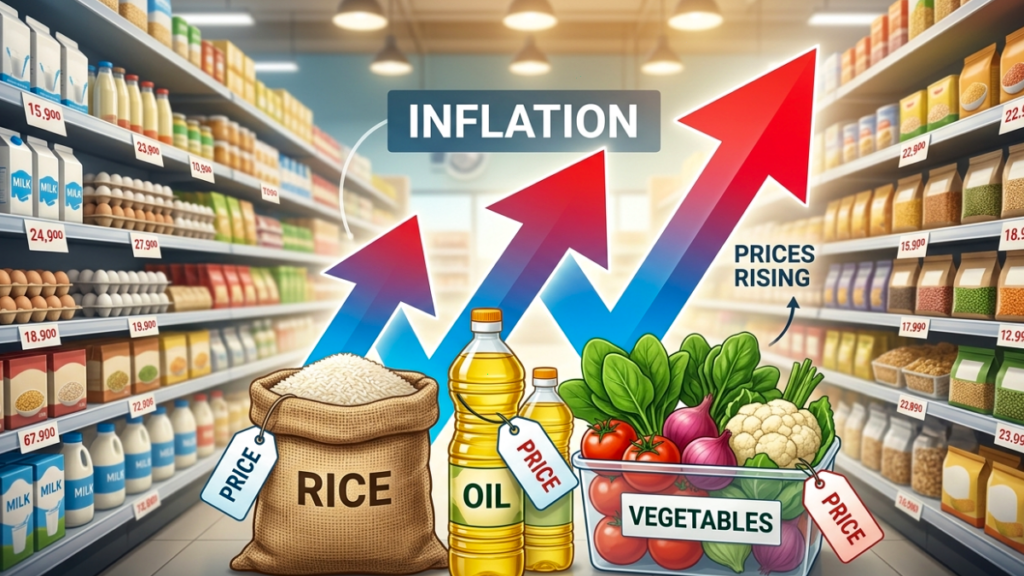
Key factors pushing prices up
• Climate-driven crop shortages affecting vegetables and grains
• Fuel and logistics costs passed to consumers
• Smaller pack sizes at the same price, shrinkflation
• Dynamic pricing in supermarkets and apps
• Premium private labels replacing budget options
• Convenience fees in online grocery delivery
• Import price volatility for edible oils and pulses
Example
A 1-litre cooking oil that cost ₹150 in 2023 now sells for ₹185 to ₹210, depending on brand and store. Some brands reduced the quantity to 900 ml without reducing the price.
If you do not compare unit prices, you pay more without noticing.
How Much You Can Actually save money on groceries in 2026
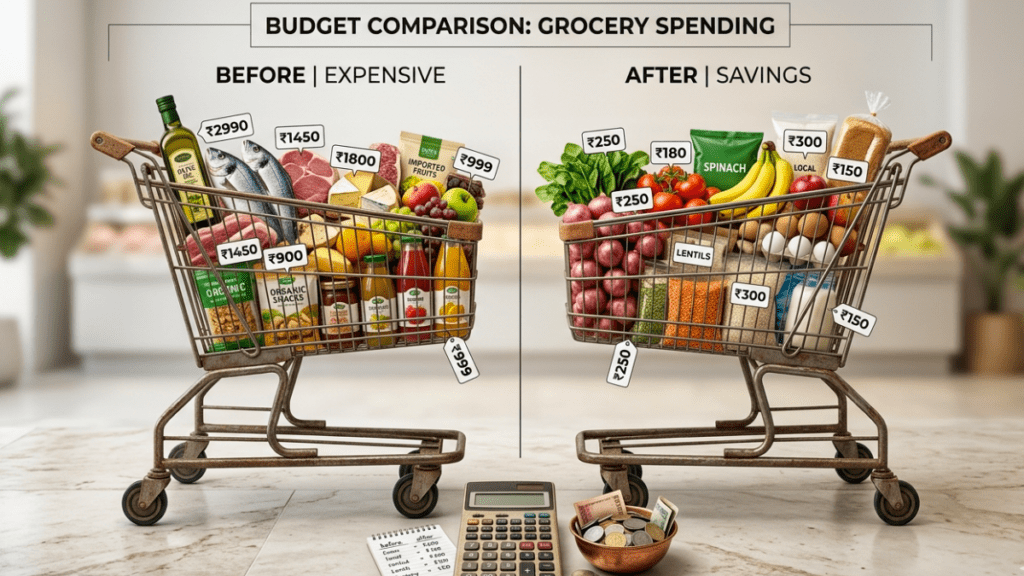
Average household savings potential
• Smart meal planning saves 10 to 15 %
• Buying store brands saves 8 to 12 %
• Bulk buying staples saves 5 to 10 %
• Reducing food waste saves 5 to 8 %
• Using cashback and rewards saves 3 to 5 %
Combined savings can reach 30 %.
If you spend ₹12,000 monthly on groceries, that is ₹3,600 saved.
Step 1. Build a Grocery Budget That Works
Start with your current spend. Check the last month’s bank or app history.
Split into categories
• Staples, rice, flour, pulses
• Dairy and eggs
• Fruits and vegetables
• Snacks and beverages
• Frozen and ready to cook
• Household items
Example monthly budget
• Staples ₹3,000
• Dairy ₹1,800
• Produce ₹2,500
• Snacks ₹1,200
• Frozen ₹800
• Household ₹700
Total ₹10,000
Once you see categories, you can trim waste. Most overspending happens in snacks and impulse buys.
Step 2. Use the 2026 Smart Shopping Rule
Follow this three-step rule
- Plan meals first
- Check prices second
- Buy last
Most people do it in reverse. That leads to impulse buying.
Example
Instead of buying random vegetables, decide on meals
Monday: Vegetable pulao
Tuesday: Idlis Sambar
Wednesday: Egg rice
Thursday: vegetable curry
Friday: pasta
Saturday: leftovers
Sunday: chicken curry
Now you buy only what you need.
Step 3. Compare Unit Price, Not Pack Price
This is the biggest money saver.
Example
Brand A 1 kg rice ₹82
Brand B 5 kg rice ₹395
Brand B per kg ₹79
You save ₹3 per kg. Over a month, this matters.
Always check
• Price per kg
• Price per litre
• Price per piece
Apps and supermarkets show this now. Use it.
Step 4. Choose Store Brands Over Premium Brands
Store brands improved quality in 2026. Many are made by the same manufacturers.
Savings
• Store brand flour 20 % cheaper
• Store brand pasta 25 % cheaper
• Store brand spices 15 % cheaper
Example
Premium oats ₹210
Store brand oats ₹155
You save ₹55 instantly.
Step 5. Shop Seasonal Produce
Seasonal fruits and vegetables cost less and taste better.
Example Price comparison
Off-season tomatoes ₹80 per kg
Seasonal tomatoes ₹28 per kg
Savings ₹52 per kg.
What to buy seasonally
• Mango in summer
• Cauliflower in winter
• Spinach during cooler months
• Watermelon in peak summer
• Beans during the harvest period
Avoid imported fruits unless discounted.
Step 6. Reduce Online Grocery Delivery Costs
Online grocery apps are convenient but expensive.
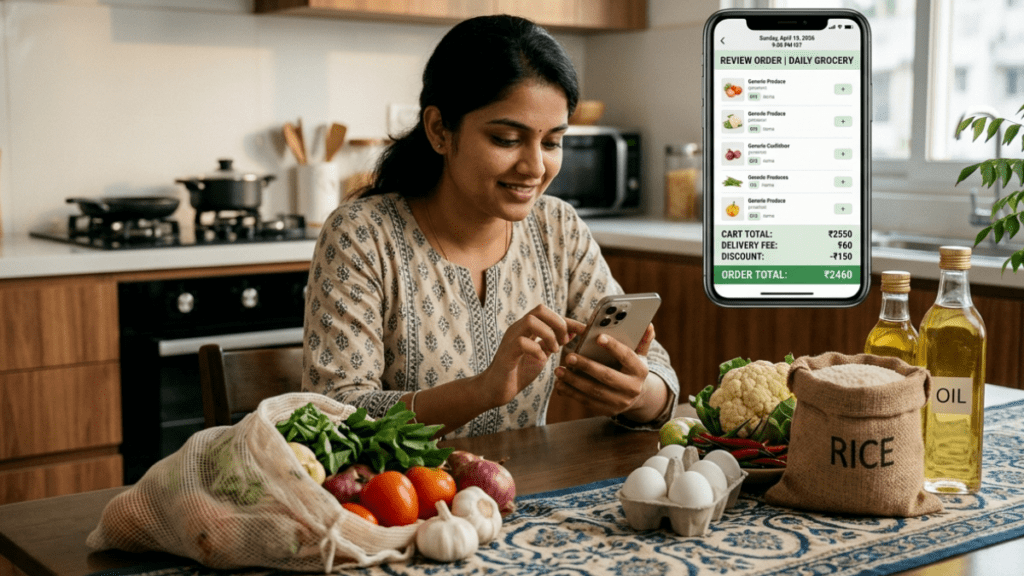
Hidden costs
• Delivery fee
• Surge pricing
• Platform fee
• Marked up product price
How to reduce
• Use free delivery threshold
• Combine weekly orders
• Compare with the local store
• Avoid peak hour ordering
• Use first-order offers
Example
Two small orders cost
Order 1 fee ₹40
Order 2 fee ₹40
Total ₹80
One combined order saves ₹80.
Step 7. Use AI Price Tracking Apps
Trending in 2026. Price tracking apps alert you when prices drop.
Features
• Historical price chart
• Price drop alerts
• Store comparison
• Coupon stacking
Example
Coffee price fluctuates between ₹420 and ₹360.
You wait for the alert. Buy at ₹360.
Savings ₹60.
Step 8. Stop Food Waste
This is hidden money loss.
Average household waste
10 to 15 % groceries are wasted.
Common waste
• Spoiled vegetables
• Expired dairy
• Cooked leftovers
• Forgotten frozen items
Fix it
• Store vegetables properly
• Label leftover dates
• Freeze extra portions
• Plan leftover meals
Example
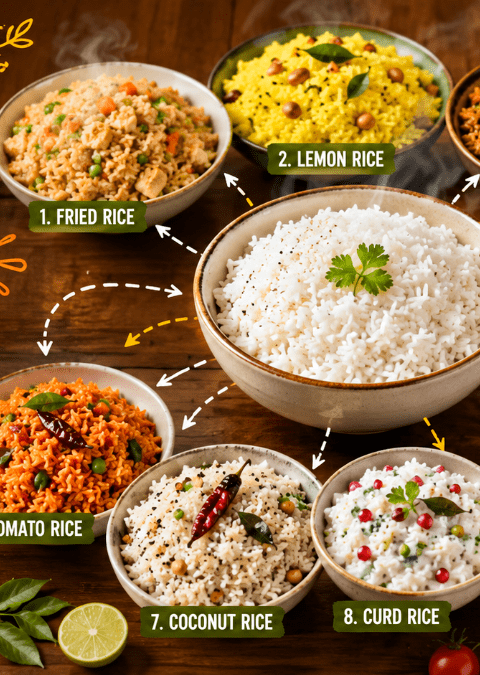
Leftover rice becomes fried rice the next day.
You save the full meal cost.
Step 9. Buy Staples in Bulk
Only bulk buy non-perishables.
Best bulk items
• Rice
• Flour
• Lentils
• Cooking oil
• Sugar
• Pasta
Avoid bulk buying
• Fresh vegetables
• Dairy
• Bread
• Fruits
Example
5 kg flour ₹240
1 kg flour ₹55
Five 1 kg packs cost ₹275
Bulk saves ₹35.
Step 10. Create a Weekly Meal Plan
This reduces impulse buying.
Sample budget meal plan
Monday
Vegetable pulao
Tuesday
Sambar and rice
Wednesday
Egg curry
Thursday
Vegetable stir fry
Friday
Pasta
Saturday
Leftover mix
Sunday
Chicken curry
This covers a full week under ₹1,500.
Step 11. Avoid These Expensive Grocery Mistakes
Most common budget killers
• Shopping hungry
• Buying pre-cut vegetables
• Choosing convenience meals
• Ignoring expiry dates
• Overbuying snacks
• Buying premium packaging
Example
Cut fruit pack ₹90
Whole fruit ₹40
You pay more than double.
Step 12. Use Cashback and Rewards
Use bank offers and wallet cashback.
Example savings
• 5 percent cashback ₹500 order saves ₹25
• Credit card grocery offer saves ₹100
• App reward points reduce the next bill
Monthly savings of ₹300-₹500.
Step 13. Switch to Budget Protein Sources
Protein is expensive. Choose cheaper options.
Affordable proteins
• Eggs
• Lentils
• Chickpeas
• Peanuts
• Curd
• Soy chunks
Example
Chicken per serving ₹70
Lentil per serving ₹18
Huge savings.
Step 14. Try the 5 4 3 2 1 Grocery Method
This is a trending 2026 budgeting method.
Buy
• 5 vegetables
• 4 fruits
• 3 protein items
• 2 grains
• 1 snack
This limits overspending.
Example
Vegetables
potato, carrot, beans, cabbage, onion
Fruits
banana, apple, papaya, orange
Protein
eggs, lentils, chickpeas
Grains
rice, flour
Snack
popcorn
Balanced and budget-friendly.
Step 15. Shop Once Per Week
Frequent shopping increases impulse buys.
Example
Three trips spent ₹600 each
Total ₹1,800
One planned trip ₹1,200
You save ₹600.
Step 16. Track Your Grocery Spend
Use a simple method.
Write
Week 1 ₹2,300
Week 2 ₹2,100
Week 3 ₹1,900
Week 4 ₹2,200
Total ₹8,500
Next month, aim for ₹8,000.
Tracking reduces overspending automatically.
Step 17. Grow Small Kitchen Herbs
Low effort. Saves money.
Grow
• coriander
• mint
• curry leaves
• green chilli
These costs frequently occur in stores.
Homegrown reduces repeated buying.
Step 18. Choose Frozen Vegetables Smartly
Frozen vegetables can be cheaper.
Example
Fresh peas off-season ₹180 per kg
Frozen peas ₹120 per kg
They last longer. Less waste.
When to buy frozen
• peas
• corn
• mixed vegetables
• spinach
Avoid frozen ready meals.
Step 19. Split Bulk Purchases With Friends
Example
10 kg rice ₹760
Split with a friend
You each pay ₹380 for 5 kg.
Better price. No storage problem.
Step 20. Follow the 80 20 Grocery Rule
80 percent essentials
20 percent treats
This keeps the budget balanced.
Example
₹8,000 budget
Essentials ₹6,400
Treats ₹1,600
Prevents overspending.
Best Grocery Saving Habits in 2026
• Plan weekly meals
• Compare unit price
• Buy seasonal produce
• Use store brands
• Track price drops
• Reduce food waste
• Bulk buy staples
• Limit snacks
• Use cashback offers
• Shop once per week
These habits work long-term.
Saving money on groceries in 2026 is about planning and discipline. Prices will keep changing. Retailers will keep pushing premium products. You stay in control by tracking, planning, and buying intentionally. Start with meal planning. Switch to store brands. Compare unit price. Reduce waste. These simple changes cut your grocery bill quickly. Small savings each week add up to big yearly gains. The earlier you start, the more you save.