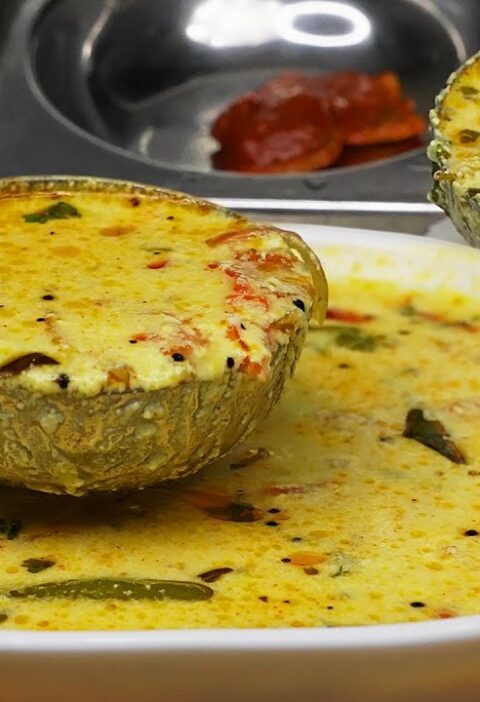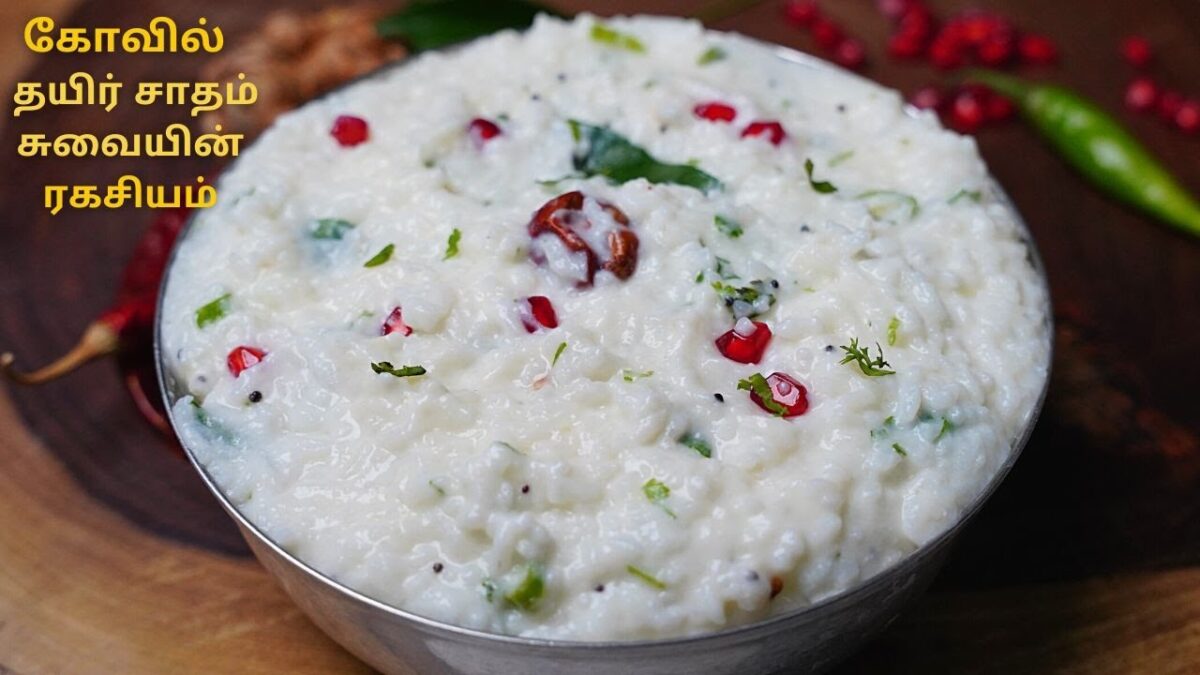
Soft, creamy, and mildly seasoned, this Temple Style Curd Rice Recipe is a simple South Indian dish made with mushy rice, milk, fresh curd, and a traditional tempering. It is especially suitable for temple-style meals, Perumal thaligai, and Purattasi padaiyal.
If you are looking for an easy curd rice recipe for lunch, a simple curd rice for your family, or a traditional thayir sadam for a festive meal, this recipe is easy to follow.
This Tamil-style curd rice recipe also works well when you are preparing a South Indian meal for special occasions. The soft texture makes it comfortable to eat, and the mild seasoning pairs well with spicy curries, pickles, and vegetable dishes.
You may know this dish as thayir sadam, thayir sadham, dahi rice, or yogurt rice. The preparation can vary between homes and temples, but the basic idea remains the same. Cook the rice until soft, cool it slightly, add curd and milk, then finish it with a flavorful tempering.
Why You Will Love This Dahi Rice
- Uses basic ingredients that are easy to find.
- The rice becomes soft, creamy, and easy to mix.
- Milk gives the curd rice a smooth texture.
- Fresh curd gives the dish its natural tang.
- The tempering adds flavor without making the dish too spicy.
- Pomegranate gives a pleasant contrast to the creamy rice.
- It works well for everyday lunch as well as festive meals.
- It is suitable for Perumal thaligai and Purattasi padaiyal.
- You can prepare the rice ahead and finish the dish quickly.
Curd Rice Recipe Ingredients
Rice: Regular raw rice works well for this recipe. Wash the rice thoroughly before cooking.
Milk: Milk helps create a soft and creamy texture. It also balances the sourness of the curd.
Curd: Choose fresh curd with a mild taste. Avoid very sour curd because it can overpower the dish.
Salt: Add salt according to your taste. Add it while cooking the rice so that the seasoning spreads evenly.
Oil: Oil is used for tempering. You can use sesame oil or another cooking oil.
Mustard seeds: They provide the classic South Indian tempering flavor.
Asafoetida: It gives the tempering a pleasant aroma and complements the curd rice.
Dry red chillies: Break them into pieces before tempering.
Green chilli: Reduce the quantity if you prefer mild curd rice.
Ginger: Add finely chopped ginger. Ginger adds freshness and balances the richness of the curd and milk.
Curry leaves: Add fresh curry leaves for aroma and flavor.
Coriander leaves: Add chopped coriander leaves at the end. They give the dish a fresh finish.
Pomegranate: Pomegranate is optional. The seeds add mild sweetness, color, and a slight crunch. They also make the curd rice more appealing when served.
Ingredients Substitutions
Curd: You can use regular homemade curd if you do not have thick curd. Strain watery curd before using it. You can also use purchased curd.
Oil: You can use Sesame oil, groundnut oil, or any mild cooking oil for tempering.
Green chillies: You can reduce or skip green chillies for children.
Coriander leaves: If you do not have coriander leaves, you can skip them.
Pomegranate: It is optional. You can leave it out without changing the basic recipe.
How to Make Temple Style Curd Rice
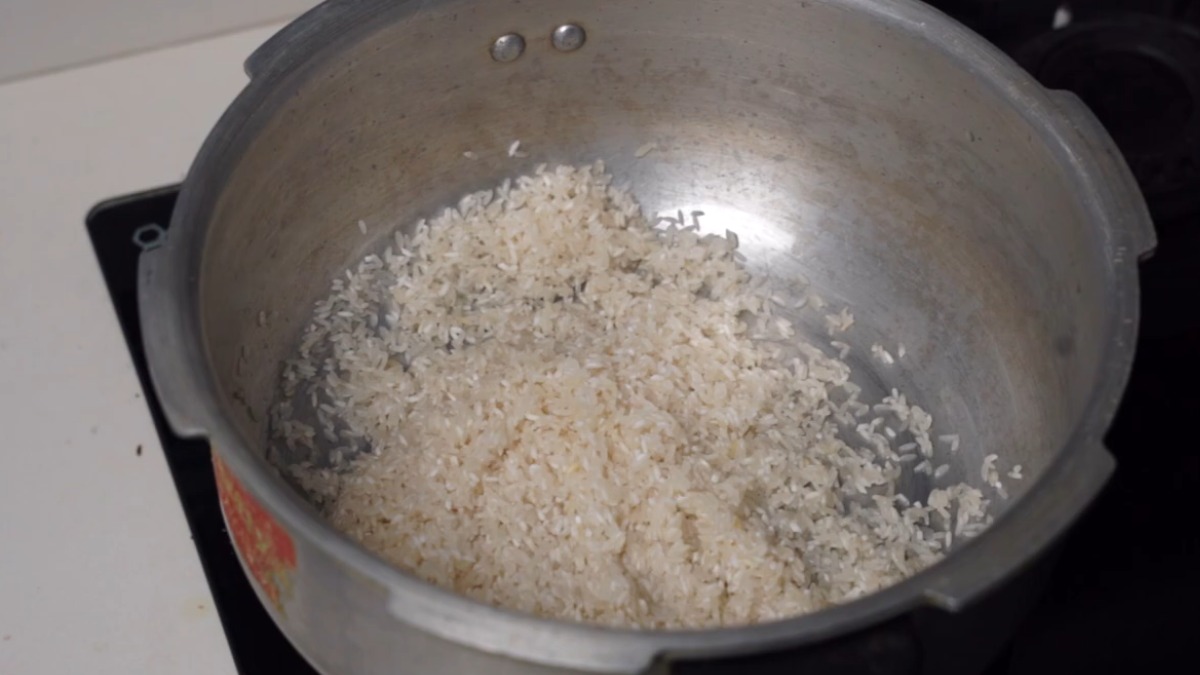
Step 1: Wash the rice
Take 1 cup of raw rice in a bowl.
Wash it thoroughly 2 to 3 times until the water becomes relatively clear. Drain the water.
Washing removes excess starch and surface impurities, resulting in cleaner cooked rice.
Step 2: Pressure cook the rice
Transfer the washed rice to a pressure cooker.
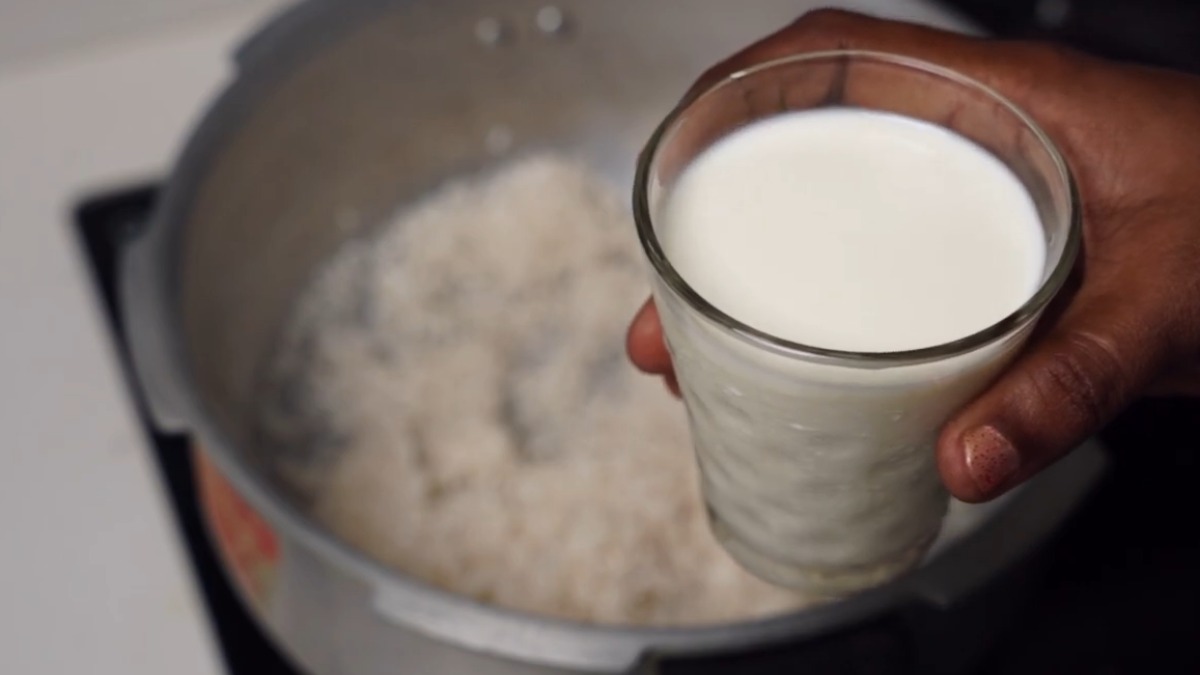
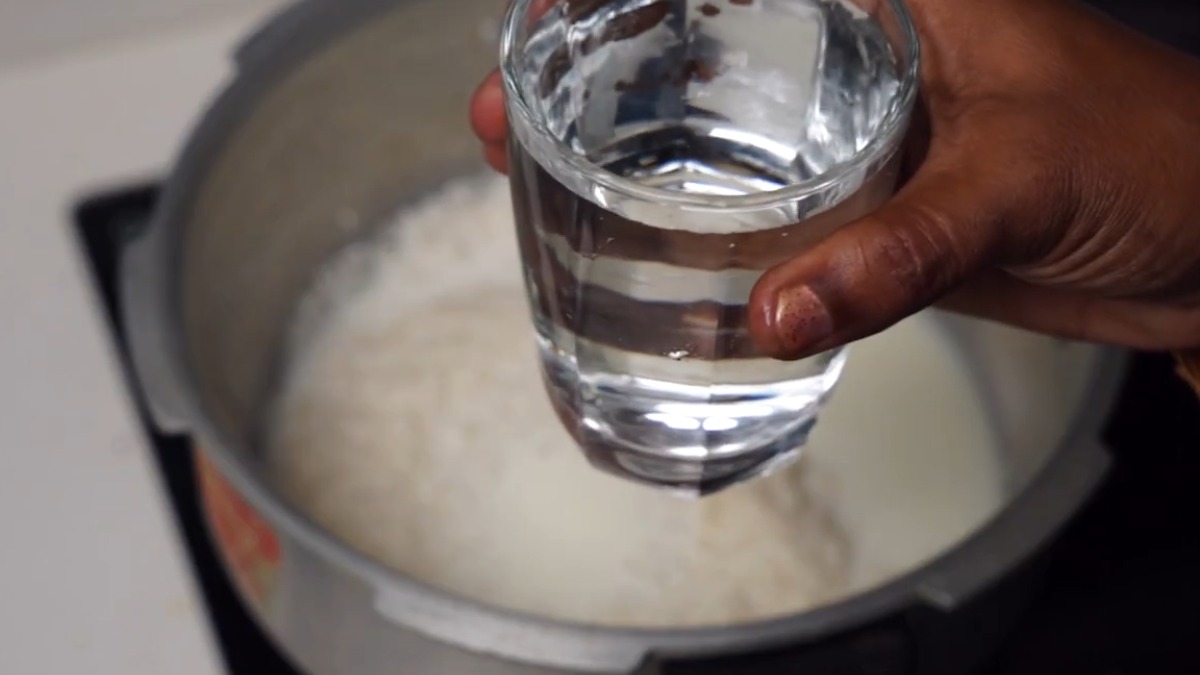
Add:
- 1 cup milk
- 2 cups water
- Salt to taste
Mix everything well.
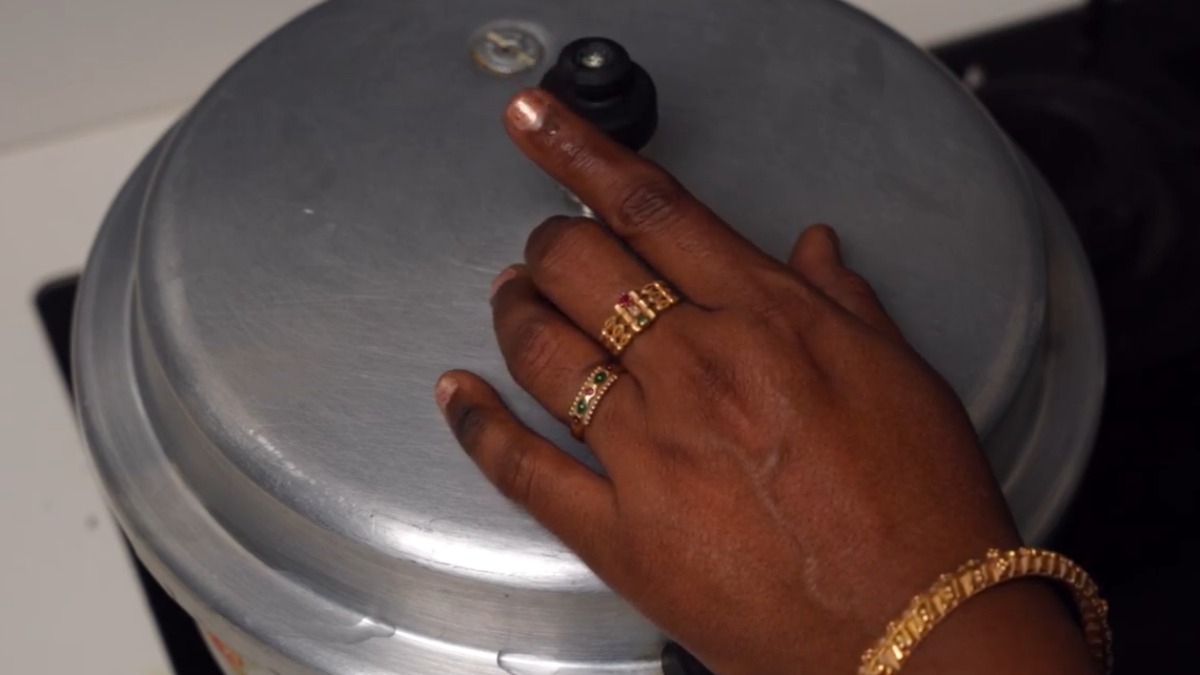
Close the pressure cooker and cook for 3-4 whistles.
The exact cooking time can vary depending on your cooker and the type of rice you use.
Step 3: Check the rice texture
Allow the pressure to release naturally before opening the cooker.
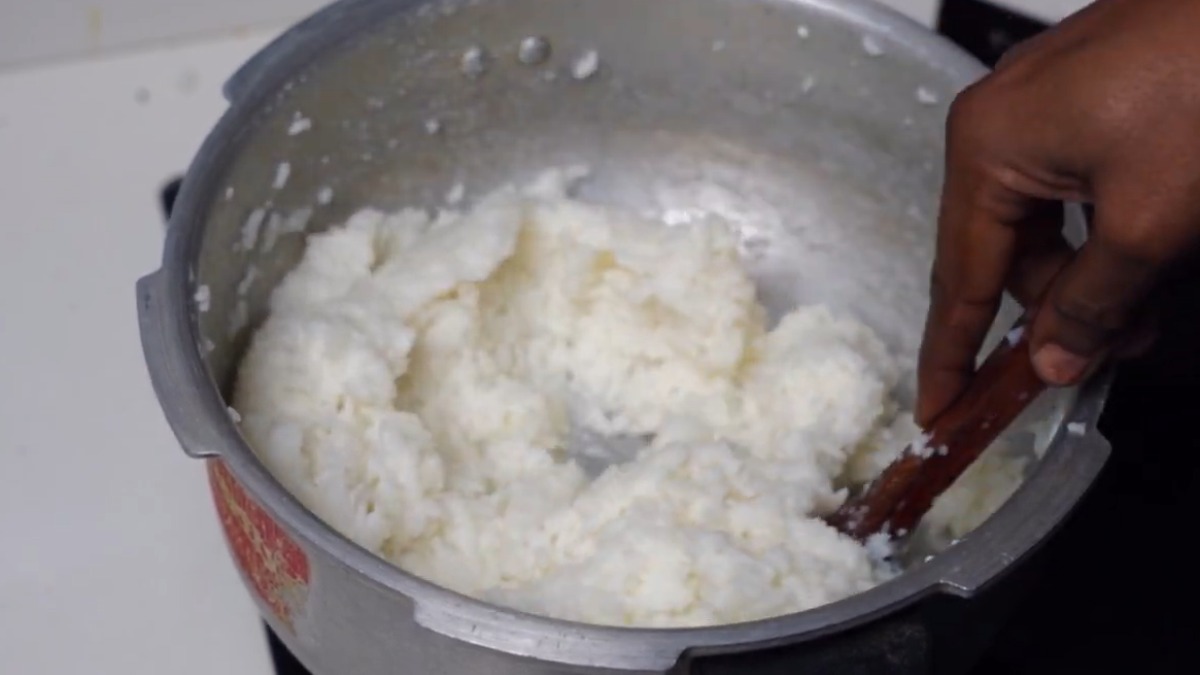
The rice should be very soft and mushy.
This texture is important for temple-style curd rice. Do not use separate, fluffy rice for this preparation.
If the rice looks too thick, add a little water and mix well. Mash the rice gently until you get a soft consistency.
Step 4: Add the curd
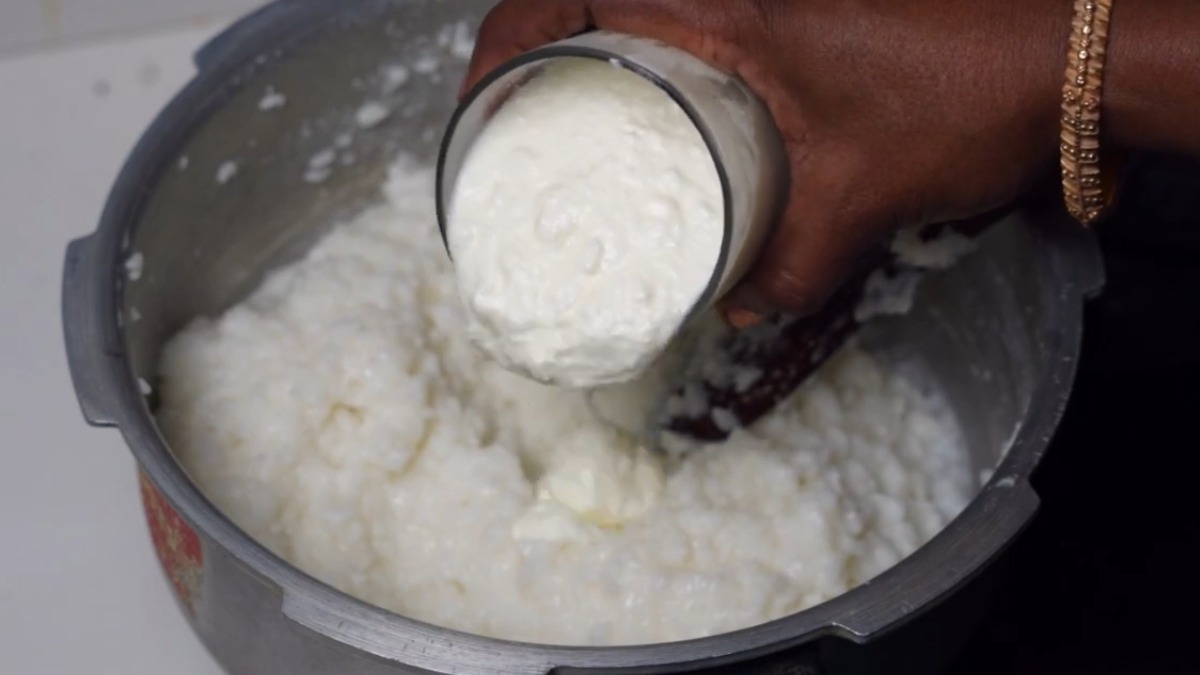
Allow the rice to cool slightly.
Add 1 cup of thick homemade curd.
Mix thoroughly.
Do not add thick curd to extremely hot rice. Very high heat can affect the texture of the curd and may cause it to separate.
If needed, add a little water to adjust the consistency.
Step 5: Prepare the tempering
Place a small pan over medium heat.
Add 1 teaspoon of oil.
Once the oil is hot, add 1 teaspoon of mustard seeds.
Allow the mustard seeds to crackle.
Add:
- 2 pinches of asafoetida
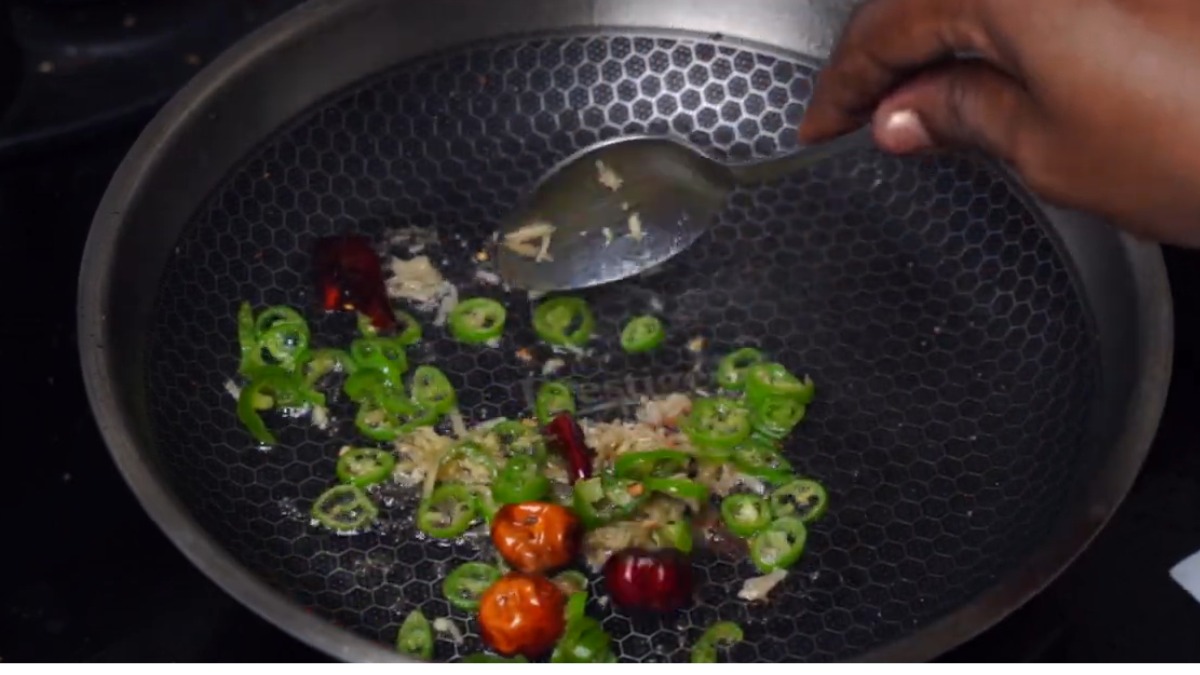
- 1 to 3 broken dry red chillies
- 2 chopped green chillies
- Chopped ginger
- Curry leaves
Sauté briefly.
Do not burn the chillies or curry leaves. The tempering should smell fresh and aromatic.
Step 6: Add the tempering
Pour the prepared tempering over the curd rice.
Add chopped coriander leaves.
Mix everything gently.
Taste and adjust the salt if needed.
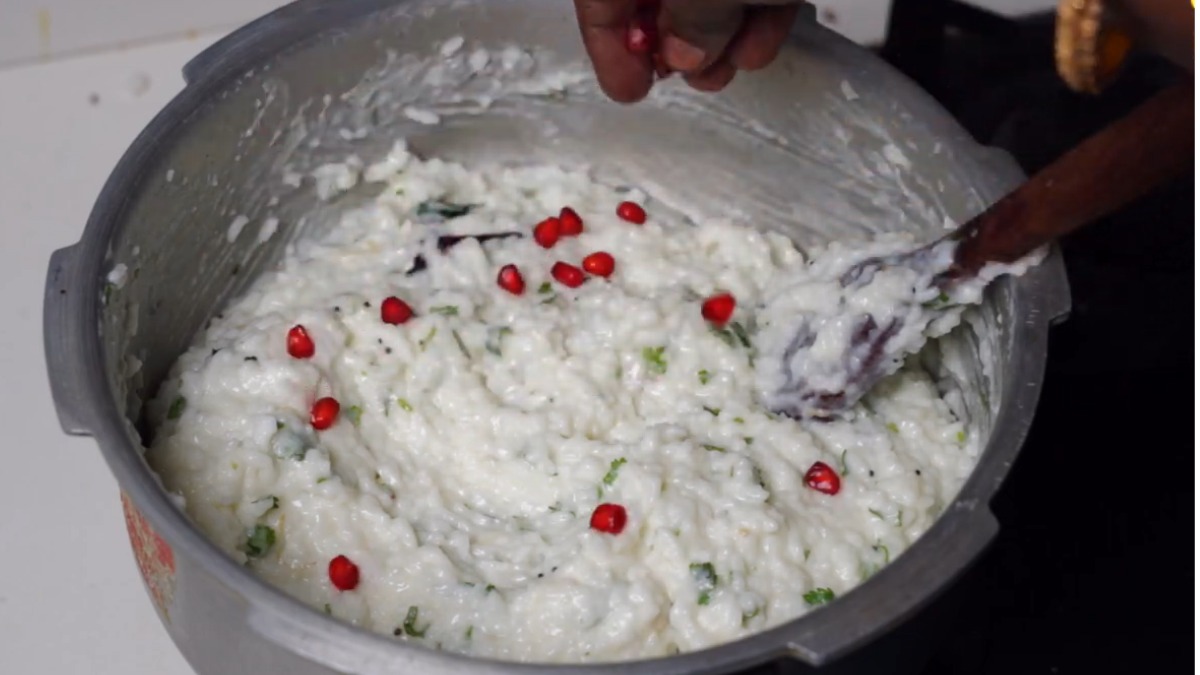
Step 7: Add pomegranate
Add pomegranate seeds if you like.
Mix gently so that the seeds remain intact.
Your temple-style curd rice is ready to serve.
To watch the Curd rice recipe in Tamil
Expert Tips for Perfect Temple-Style Curd Rice
Use mushy rice: The rice should be softer than ordinary cooked rice. This gives curd rice its characteristic creamy texture.
Do not rush the cooling process: Allow the cooked rice to cool slightly before adding curd. Adding curd to piping-hot rice can affect its texture.
Use fresh curd: Fresh curd gives the best balance of creaminess and mild tang. Very sour curd can make the entire dish taste sharp.
Keep the consistency slightly loose: Curd rice tends to thicken as it rests. Keep it slightly softer than the consistency you want when serving.
Adjust the curd: The amount of curd can vary depending on how sour and thick it is. Start with the recommended quantity and adjust according to taste.
Temper carefully: Mustard seeds should crackle, but the spices should not burn. Burnt tempering can make the curd rice bitter.
Add pomegranate just before serving: If you are preparing the dish in advance, add pomegranate closer to serving time. This keeps the seeds fresh.
Common Mistakes to Avoid
Using firm rice: Firm rice does not give you the traditional soft texture. Cook the rice until it becomes mushy.
Adding curd while the rice is extremely hot: Let the rice cool slightly before adding curd.
Using very sour curd: Very sour curd can overpower the mild flavor of the dish.
Making the rice too thick: Curd rice naturally thickens after resting. Add a little water if required.
Overcooking the tempering: Burnt mustard seeds, chillies, or curry leaves can make the dish bitter.
Adding too much chilli: Temple-style curd rice is generally mild. Keep the spice level balanced.
Adding too much pomegranate: Pomegranate is optional. Use it as a finishing ingredient rather than allowing it to dominate the dish.
Easy Variations You May Try
Carrot curd rice
Add finely grated carrot for color and a mild sweetness.
Cucumber curd rice
Finely chop or grate cucumber and mix it with the curd rice just before serving.
Cashew curd rice
Lightly roast a few cashews and add them before serving for a crunchy texture.
Grape curd rice
You can add halved seedless grapes for a mild sweet and tangy variation.
Mild child-friendly version
Reduce the green chilli and dry red chilli. Keep the rice soft and creamy.
What to Serve with Temple Style Curd Rice Recipe
Temple-style curd rice tastes best when served with a South Indian meal.
You can serve it with:
- Lemon pickle
- Mango pickle
- Vegetable poriyal
- Potato roast
- Carrot beans poriyal
- Appalam
- Vathal
- Spicy vegetable curry
- Sundal
- Fresh pomegranate
For a traditional festive meal, serve curd rice toward the end of the meal. It can help balance dishes that are spicy, tangy, or heavily seasoned.
This recipe also fits well into a Perumal thaligai or Purattasi padaiyal menu.
How to Store Curd Rice
Curd rice is best when freshly prepared, but you can store leftovers safely in the refrigerator.
- Transfer the curd rice to a clean airtight container.
- Refrigerate it promptly.
- If you are preparing it for later, keep the consistency slightly loose because the rice will absorb moisture while resting.
- For the best taste and texture, consume refrigerated curd rice within a short period rather than keeping it for several days.
How to Reheat Curd Rice
Curd rice does not need aggressive reheating.
- If it becomes thick after refrigeration, take it out and allow it to come closer to room temperature.
- Add a small amount of milk or water.
- Mix gently until the desired consistency returns.
- Avoid heating it at high temperatures because curd can separate.
- If you want the freshest taste, prepare the rice ahead and mix it with fresh curd closer to serving time.
How to Choose the Right Curd for Temple Style Curd Rice
The curd you use can make a noticeable difference to the final taste.
Choose curd that is:
- Fresh
- Thick
- Creamy
- Mildly tangy
- Free from excessive water
Homemade curd is a good option because you can control its consistency and sourness.
If your curd is very sour, use less of it initially and adjust the flavor with fresh curd or a little milk.
Frequently Asked Questions
Can I make temple style curd rice without milk?
Yes. You can make curd rice using only cooked rice and curd. However, milk gives this version a softer and creamier texture.
Why does my curd rice become thick?
Rice continues to absorb liquid after cooking. Curd rice also thickens when refrigerated. Add a little water or milk and mix well before serving.
Can I use leftover rice?
Yes. You can use leftover rice, but cook it again with a little water if it is too firm. Mash it well before adding curd.
Why should the rice be mushy?
Mushy rice creates the soft texture associated with traditional thayir sadam. Firm rice produces a drier and more separated result.
Can I use yogurt instead of curd?
Yes. Plain unsweetened yogurt can be used. Avoid flavored or sweetened yogurt.
What rice is best for curd rice?
Regular raw rice works well. The most important factor is cooking the rice until it becomes very soft and mushy.
Is this a South Indian curd rice recipe?
Yes. Curd rice, also called thayir sadam or thayir sadham, is a popular South Indian preparation. This version uses a simple traditional tempering.
Temple Style Curd Rice
Ingredients
For Tempering
Instructions
- Wash the raw rice thoroughly.
- Add the rice, milk, water and salt to a pressure cooker. Pressure cook for 3 to 4 whistles.
- Allow the pressure to release naturally.
- Check that the rice is very soft and mushy. Add a little water and mash if required.
- Allow the rice to cool slightly.
- Add 1 cup of thick homemade curd and mix well.
- Heat 1 teaspoon oil in a small pan.
- Add mustard seeds and allow them to crackle.
- Add asafoetida, dry red chillies, green chillies, ginger and curry leaves.
- Sauté briefly without burning the ingredients.
- Pour the tempering over the curd rice.
- Add chopped coriander leaves and mix.
- Add pomegranate seeds if desired.
- Serve fresh with pickle, poriyal, appalam or other South Indian side dishes.
Notes
- The rice should be softer than normal cooked rice.
Allow the rice to cool slightly before adding curd.
Adjust the consistency with water or milk if the curd rice becomes thick.
Use fresh, mildly tangy curd for the best taste.
Pomegranate is optional.
You may also like