Street food is part of daily life in India. You find it outside offices, near schools, at railway stations, and in busy markets. It is fast, affordable, and full of flavor. From pani puri to dosa, the variety is endless.
But food safety remains a concern. Contaminated water, poor hygiene, and unsafe storage can lead to illness. The World Health Organization estimates that millions fall sick every year due to unsafe food. In India, cases of foodborne illness rise during the summer and monsoon.
You do not need to avoid street food. You need to choose wisely. This guide gives you clear steps to eat safely without missing out.
Why Street Food Safety Matters
Street food often operates outside strict monitoring. Many vendors lack access to clean water, refrigeration, and waste disposal.
Common risks include:
- Bacterial contamination from unclean hands or surfaces
- Use of unsafe water for cooking or washing
- Improper storage of cooked food
- Exposure to dust, flies, and pollution
Symptoms of unsafe food include:
- Diarrhea
- Vomiting
- Stomach pain
- Fever
These issues affect children, elderly people, and travelers more severely.
How to Choose a Safe Street Food Vendor
Your safety starts with observation. Spend a minute watching before you order.
Look for these signs:
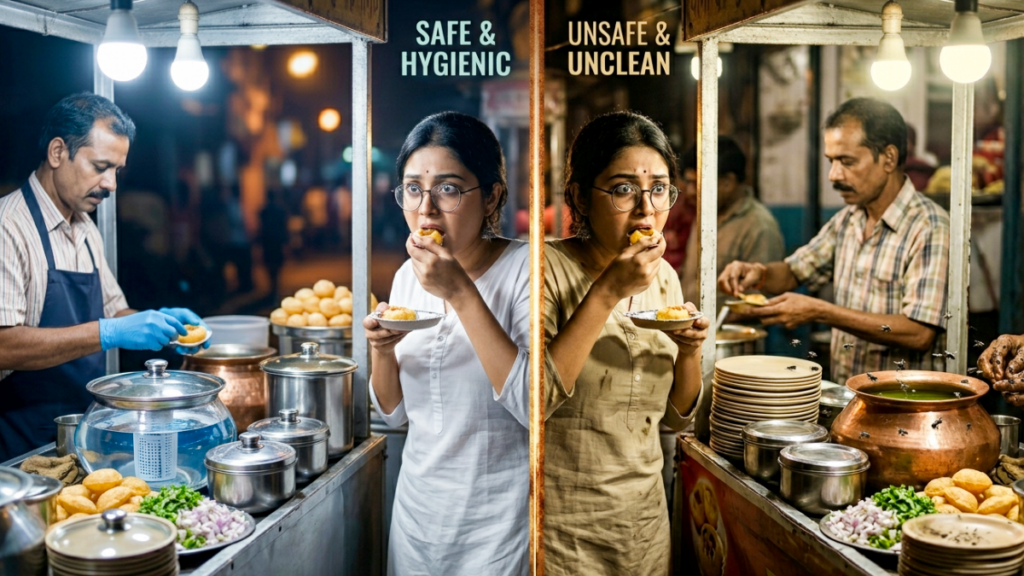
- High customer turnover: Fresh food gets prepared often. Less chance of stale items.
- Clean cooking area: Surfaces should look wiped, not greasy or sticky.
- Covered ingredients: Food should not sit open in dust or near flies.
- Proper waste disposal: Garbage bins should be nearby and not overflowing.
- Vendor hygiene: Clean clothes, trimmed nails, and no visible illness.
Avoid vendors who:
- Handle money and food without washing hands
- Store raw and cooked food together
- Keep food exposed to traffic fumes
Best Time to Eat Street Food
Timing affects safety.
Follow these tips:
- Eat during peak hours: Fresh batches get cooked quickly.
- Avoid late-night leftovers: Food may sit for hours.
- Be cautious in extreme heat: Bacteria grow faster in high temperatures.
- Take extra care during the monsoon: Water contamination increases.
Example: In cities like Mumbai and Chennai, food safety complaints rise during monsoon months due to waterborne contamination.
Safe Food Choices on the Street
Some foods carry a lower risk than others.
Safer options:
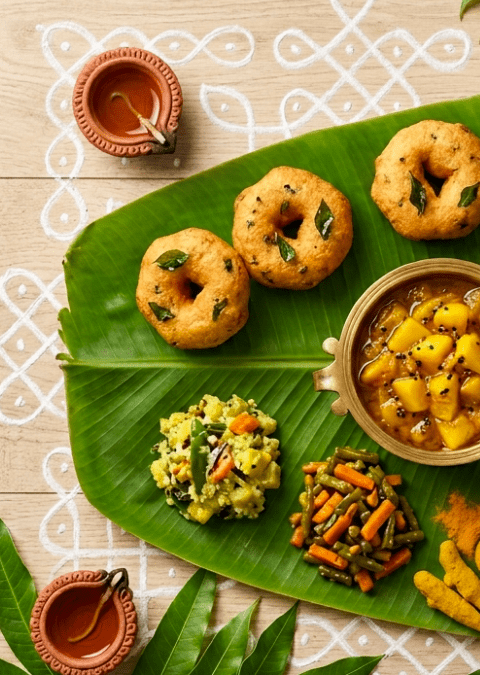
- Freshly cooked hot food: Idli, dosa, vada, pav bhaji, chole
- Deep-fried items: samosas, pakoras, bhajis. High heat kills bacteria.
- Roasted items: Corn, peanuts
- Food cooked in front of you: You see the process
Foods to avoid or limit:
- Cut fruits left uncovered
- Raw salads washed in unsafe water
- Chutneys stored for long periods
- Ice-based drinks
- Meat that looks undercooked
Water and Beverage Safety
Water causes many foodborne illnesses.
Protect yourself:
- Drink sealed bottled water: Check the seal before opening
- Avoid ice cubes: Ice often comes from untreated water
- Prefer hot beverages: Tea and coffee made with boiling water
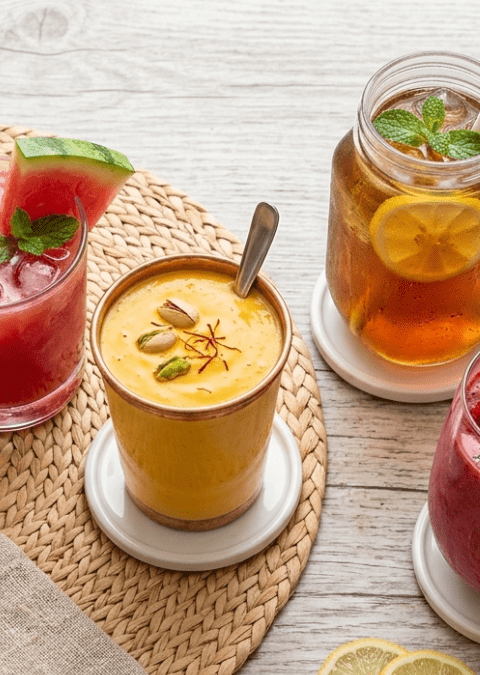
- Skip colored drinks from roadside stalls: Artificial syrups and unsafe water mix often
Example: A study by the Food Safety and Standards Authority of India found that a large portion of roadside beverages failed basic safety checks due to water quality issues.
Personal Hygiene Habits
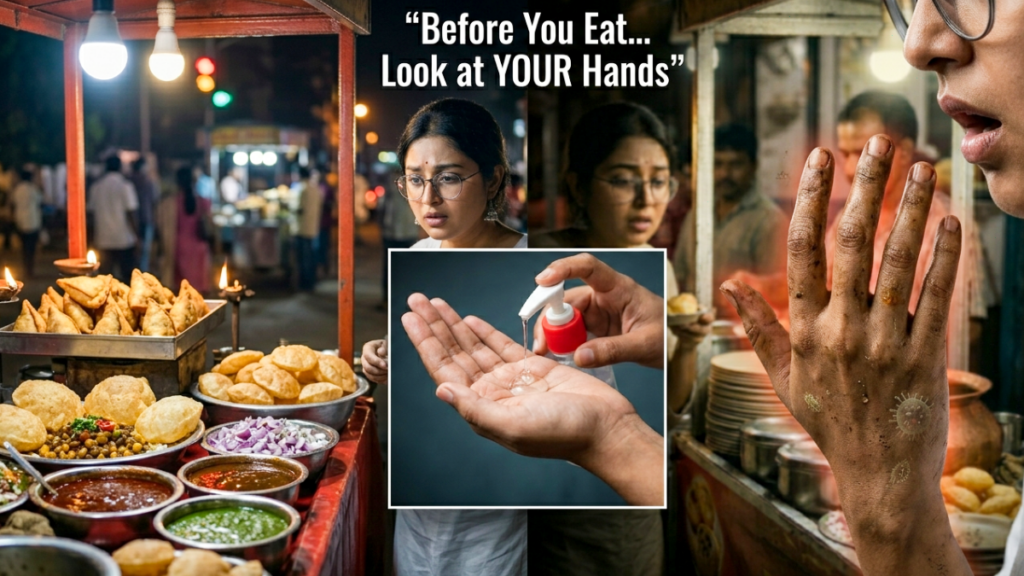
Your habits matter as much as the vendor’s.
Follow these steps:
- Wash your hands before eating
- Carry hand sanitizer
- Avoid touching food with unclean hands
- Do not eat if you have open cuts on your hands
Simple action reduces risk.
Check for Oil Quality
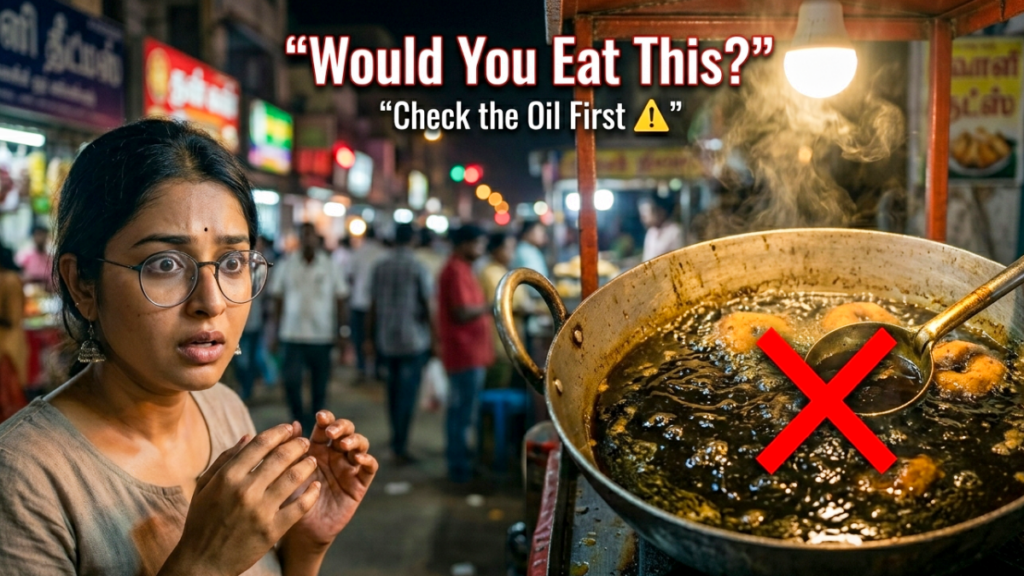
Street food often uses reused oil.
Watch for:
- Dark or thick oil
- Strong burnt smell
- Excess smoke while frying
Reused oil forms harmful compounds. It affects digestion and long-term health.
Choose vendors who:
- Fry in small batches
- Change oil regularly
Observe Cooking Practices
Cooking method impacts safety.
Look for:
- High cooking temperatures
- Fresh ingredients are added in front of you
- Minimal delay between cooking and serving
Avoid:
- Pre-cooked food reheated multiple times
- Half-cooked meat or eggs
Handling of Utensils and Plates
Utensils carry bacteria if not cleaned well.
Check for:
- Use of disposable plates or clean steel plates
- Proper washing setup with clean water
- Separate utensils for raw and cooked food
Be cautious if:
- Plates look greasy
- Water used for washing looks dirty
You can carry your own spoon if needed.
Regional Street Food Risks in India
Different regions have different risks.
North India:
- Dairy-based sweets spoil fast in heat
- Avoid milk products kept outside refrigeration
South India:
- Coconut chutney spoils quickly
- Eat only fresh servings
Coastal areas:
- Seafood needs proper storage
- Avoid items that smell off
Urban metro cities:
- Pollution exposure affects open food
- Choose vendors in cleaner zones
Street Food and Children
Children face a higher risk.
Follow these steps:
- Give freshly cooked food only
- Avoid spicy or oily items
- Carry safe drinking water
- Watch portion sizes
Do not give:
- Raw street salads
- Ice-based desserts
Street Food for Travelers
Travelers often face stomach issues due to unfamiliar bacteria.
Tips:
- Start with small portions
- Avoid raw items
- Stick to hot, cooked food
- Drink only sealed water
Many travelers report stomach infections in the first few days due to a sudden dietary change.
Government Rules and Reality
India has food safety laws under FSSAI. Vendors need licenses and basic hygiene standards.
In reality:
- Many small vendors operate without strict checks
- Inspections vary by city
- Awareness among vendors is improving, but unevenly
Some cities have introduced training programs for vendors.
Simple Checklist: Street food safety tips in India
Run through this quick list:
- Is the food hot and fresh
- Is the stall clean
- Are ingredients covered
- Is the vendor handling food properly
- Is the water source safe
If two or more answers are no, skip the stall.
What to Do If You Fall Sick
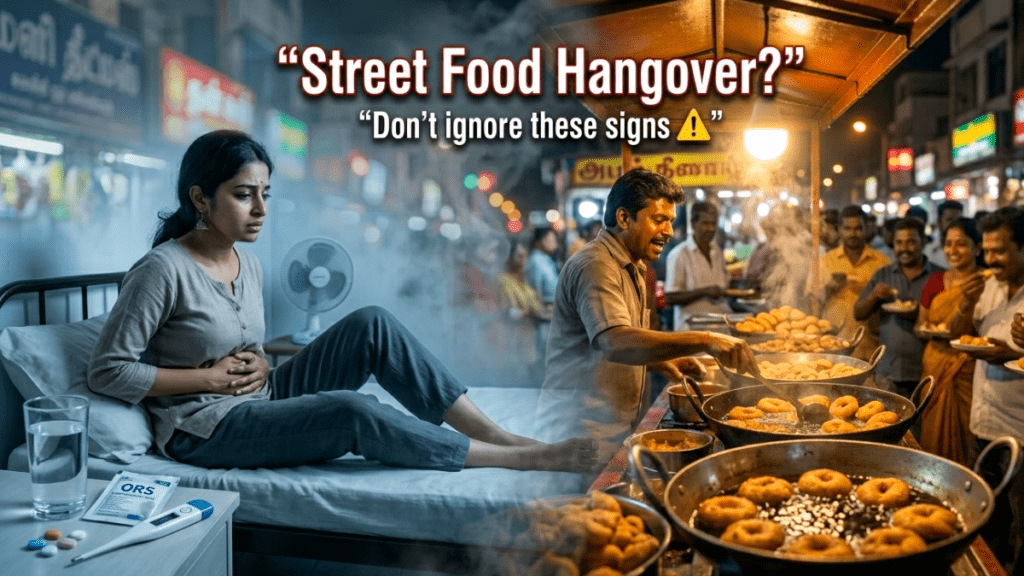
Act early.
Steps:
- Drink clean fluids
- Use oral rehydration salts
- Avoid street food until recovery
- Consult a doctor if symptoms last more than 24 hours
Do not ignore severe symptoms like high fever or dehydration.
Balancing Taste and Safety in Street Food
Street food is part of culture. It supports millions of small vendors. You do not need to stop eating it. You need awareness. Make informed choices. Observe before you eat. Choose fresh, hot food. Stay alert about water and hygiene.
Street food in India offers unmatched taste and variety. It fits every budget and every city. But safety depends on your choices. You reduce risk by picking clean vendors, eating freshly cooked food, and avoiding unsafe water. Small steps protect your health. Eat smart. Stay alert. Enjoy street food without worry.