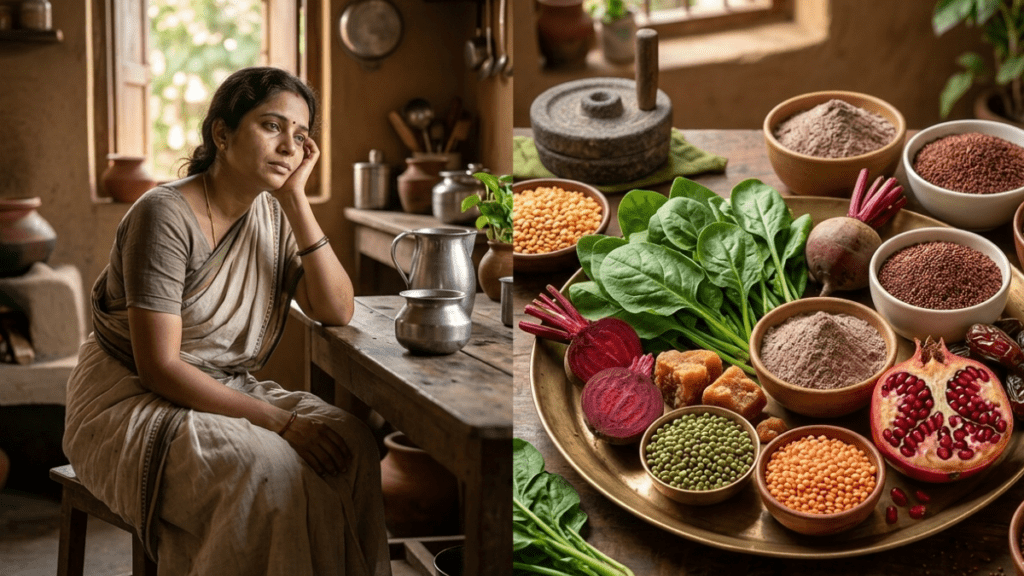
Across India, a growing health concern is quietly affecting millions of women – iron deficiency. Often overlooked until it becomes severe, this condition is now emerging as a widespread nutritional challenge. From young girls in their teens to working professionals and mothers, iron deficiency is impacting energy levels, productivity, and overall well-being.
At its most severe stage, iron deficiency leads to Iron Deficiency Anemia, a condition in which the body lacks sufficient healthy red blood cells to carry adequate oxygen to tissues. The consequences are not just physical fatigue but also reduced immunity, poor cognitive function, and complications during pregnancy.
With changing dietary habits, busy lifestyles, and increased reliance on processed foods, the problem is escalating – especially among women in India. But the good news? The solution is largely within reach – through mindful eating and incorporating iron-rich foods into daily meals.
This article explores why iron deficiency is rising, its impact, and most importantly, the foods and recipes that can help combat it effectively.
Why Is Iron Deficiency Increasing Among Women in India?
1. Nutritional Gaps in Modern Diets
Traditional Indian diets were once rich in lentils, greens, and whole grains. However, urbanization and fast-paced lifestyles have led many to opt for convenience foods that are often low in essential nutrients, including iron.
2. Increased Iron Needs
Women naturally require more iron due to menstruation. Pregnancy and breastfeeding further increase these needs. Without proper dietary intake, deficiency becomes inevitable.
3. Poor Iron Absorption
Even when iron-rich foods are consumed, absorption can be hindered by factors such as:
- High intake of tea or coffee with meals
- Low Vitamin C consumption
- Excessive intake of processed foods
4. Lack of Awareness
Many women ignore early symptoms like fatigue, dizziness, or pale skin, attributing them to stress or overwork.
Symptoms You Shouldn’t Ignore
Iron deficiency can manifest in subtle but impactful ways:
- Persistent tiredness
- Shortness of breath
- Pale skin and lips
- Hair fall
- Frequent headaches
- Cold hands and feet
If left untreated, it may lead to serious complications, particularly during pregnancy.
The Role of Diet in Preventing Iron Deficiency
The most sustainable and natural way to combat iron deficiency is through diet. Iron comes in two forms:
1. Heme Iron (Animal-Based)
- Easily absorbed by the body
- Found in meat, fish, and poultry
2. Non-Heme Iron (Plant-Based)
- Found in vegetarian foods
- Requires Vitamin C for better absorption
Given that a large population in India follows vegetarian diets, understanding how to maximize non-heme iron absorption is crucial.
Iron-Rich Foods Every Woman Should Include
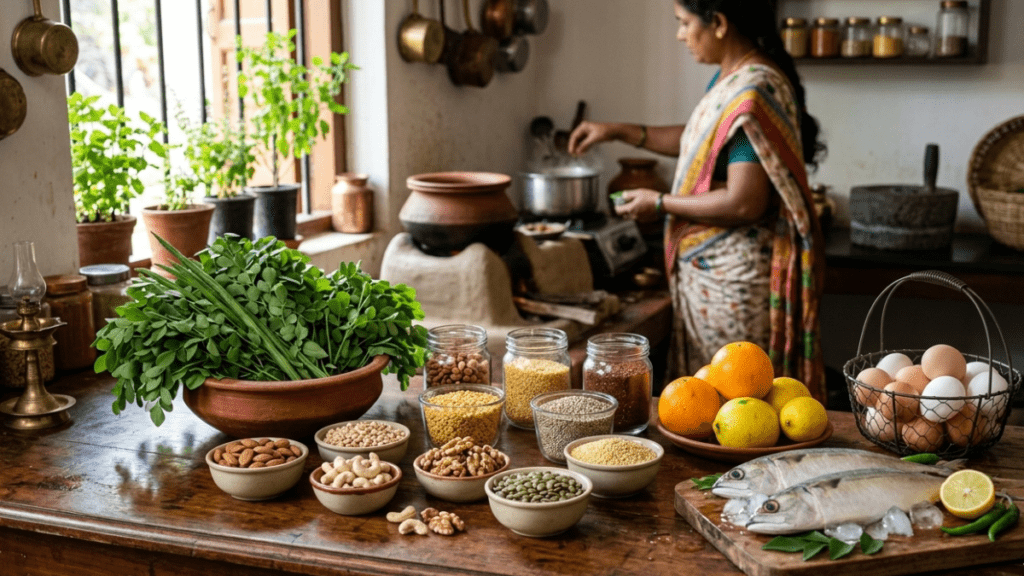
1. Green Leafy Vegetables
Spinach, amaranth, and fenugreek leaves are excellent sources of iron. They are also rich in fiber and antioxidants.
Tip: Pair them with lemon juice to boost iron absorption.
2. Lentils and Legumes
Dal varieties like masoor, moong, and chana are staples in Indian households and are packed with iron.
3. Millets
Traditional grains like ragi, bajra, and jowar are making a comeback – and for good reason. They are nutrient-dense and rich in iron.
4. Nuts and Seeds
Pumpkin seeds, sesame seeds, and almonds provide a healthy dose of iron along with good fats.
5. Jaggery
Unlike refined sugar, jaggery contains iron and can be a healthier sweetener option.
6. Fruits Rich in Vitamin C
Oranges, guava, amla, and lemons help enhance iron absorption when consumed with iron-rich foods.
7. Animal-Based Sources (For Non-Vegetarians)
Eggs, chicken liver, and fish are excellent sources of heme iron.
Iron-Boosting Recipes You Can Try at Home
Adding iron-rich foods to your diet doesn’t have to be boring. Here are some delicious, easy-to-make recipes that are both nutritious and satisfying.
1. Spinach and Lentil Curry
Why it works: Combines iron-rich spinach with protein-packed lentils.
Ingredients:
- Toor dal
- |Chopped spinach
- Garlic, turmeric
- Tamarind
- Onion
- Tomato
- Green Chilli
Method:
In a pan, add the dal, green chilli, onion, garlic, and tomato, and cook until soft. Add spinach, a pinch of tamarind, and cook until wilted. Add the tempering and serve.
2. Ragi Adai
Why it works: Ragi is one of the richest plant-based sources of iron.
Ingredients:
- Ragi flour
- Rice flour
- Murungai keerai (drumstick leaves)
- Onion (chopped)
- Green chilies (chopped)
- Cumin seeds
- Salt to taste
- Water
Method:
Mix ingredients into a thick batter, pat like an adai in the pan, and cook both sides.
Serve with: Coconut chutney and tomato chutney for added nutrients.
3. Jaggery and Sesame Laddoos
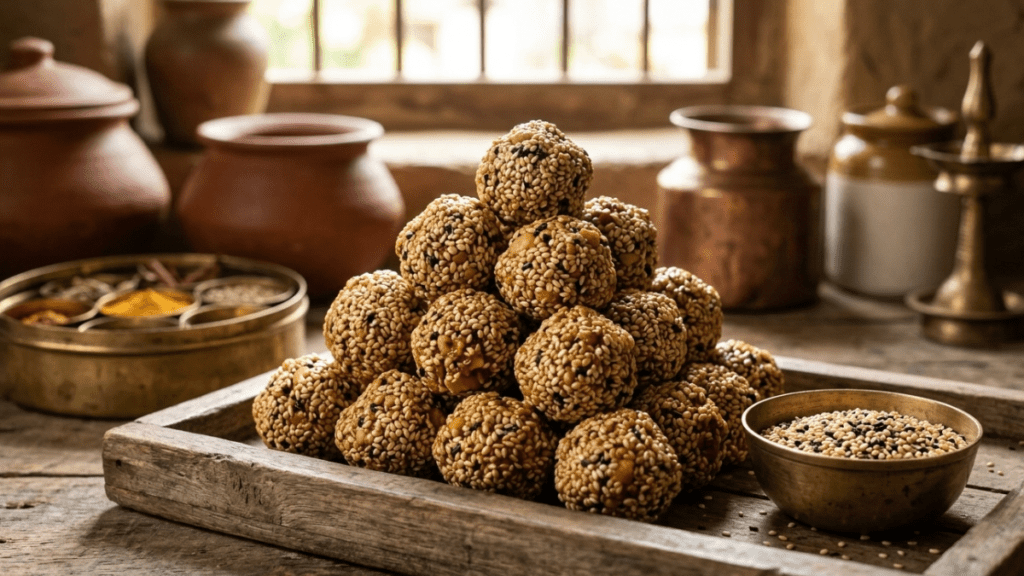
Why it works: A perfect iron-rich snack.
Ingredients:
- Sesame seeds
- Jaggery
- Ghee
Method:
Roast sesame seeds, melt jaggery, mix, and shape into laddoos.
4. Dal
Why it works: Rich in plant-based iron and protein. When combined with Vitamin C (like lemon or tomato), iron absorption improves significantly.
Ingredients:
- Toor dal (or moong dal)
- Tomato
- Garlic
- Turmeric
- Cumin seeds
- Lemon juice (optional, for better absorption)
- Oil
Method:
- Pressure cook dal with turmeric, garlic, and tomato until soft.
- Mash well and add salt.
- Pour tempering into the dal and mix.
- Finish with a squeeze of lemon juice before serving.
5. Mutton Liver Fry (Non-Vegetarian Option)
Why it works: One of the richest sources of heme iron.
Ingredients:
- Mutton liver
- Onion, Tomato, spices
- Garlic and ginger
Method:
Sauté onions and spices, add liver, and cook until tender.
Smart Eating Tips to Improve Iron Absorption
- Combine iron-rich foods with Vitamin C
- Avoid tea/coffee immediately after meals
- Use cast-iron cookware to increase the iron content in food
- Include fermented foods like idlis and dosas
The Role of Lifestyle in Managing Iron Levels
Diet alone is not enough. Lifestyle factors also play a crucial role:
- Regular health check-ups
- Balanced meals
- Adequate hydration
- Physical activity
Women, especially those with demanding schedules, must prioritize their nutrition just as much as their responsibilities.
Iron deficiency among women in India is a pressing issue, but it is also one of the most preventable. By making conscious food choices and incorporating iron-rich ingredients into everyday meals, women can significantly improve their health and energy levels.
The key lies in awareness, consistency, and balance. Whether it’s a simple bowl of palak dal, a handful of roasted seeds, or a glass of fresh juice – every small step counts.
Food is not just sustenance; it is medicine. And in the fight against iron deficiency, your kitchen can be your strongest ally.