Managing a household kitchen on a budget has become more important than ever for Indian families in 2026. With rising grocery prices, changing food habits, and busy lifestyles, smart cooking is no longer optional; it’s essential. The good news is that budget cooking doesn’t mean compromising on taste or nutrition. With the right strategies, you can prepare wholesome, delicious meals while keeping your expenses under control.
This week’s smart kitchen guide focuses on practical, real-life tips that Indian families can start using immediately. Whether you’re cooking for two or a joint family, these insights will help you save money, reduce waste, and eat better.
Why Budget Cooking Matters More in 2026
Food inflation and lifestyle changes have made kitchen planning a priority. Many families are noticing that frequent grocery runs and unplanned purchases quickly add up. At the same time, eating outside or ordering food regularly is becoming less sustainable financially.
Budget cooking helps you:
- Control monthly expenses.
- Reduce food waste.
- Improve nutrition by cooking fresh meals.
- Build better eating habits for the family
It’s not about cutting corners, it’s about cooking smarter.
Tips for Budget Cooking
1. Plan Your Weekly Meals in Advance
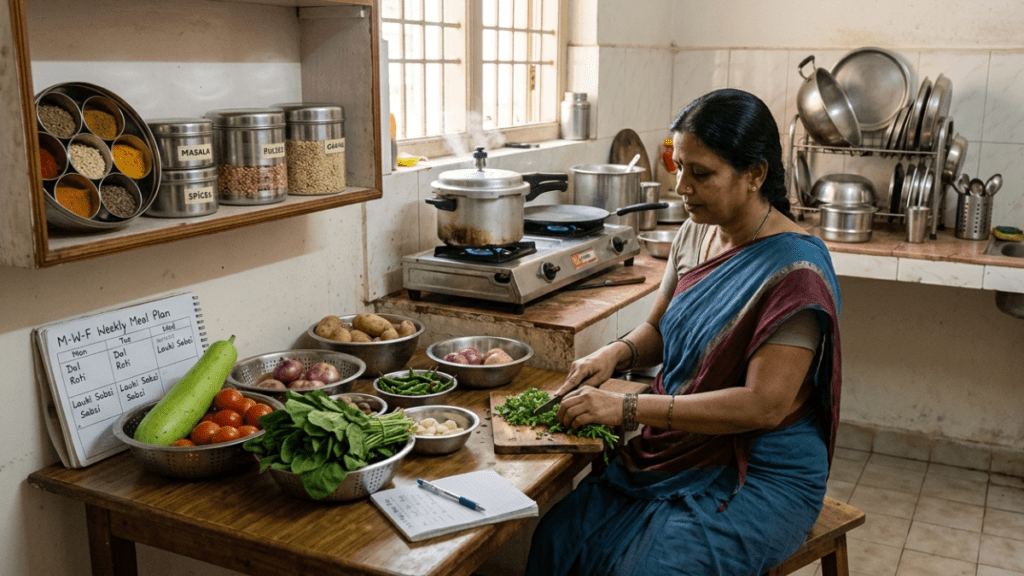
One of the simplest yet most effective ways to save money is meal planning. Instead of deciding daily what to cook, plan your meals for the entire week.
How to do it:
- Choose 5–6 main dishes for the week
- Include 1–2 quick backup meals (like upma or poha)
- Reuse ingredients across multiple dishes
Why it works:
Meal planning reduces impulse buying and ensures you only purchase what you actually need.
Example:
- If you buy coriander, use it across chutney, dal garnish, and sabzi instead of letting it spoil.
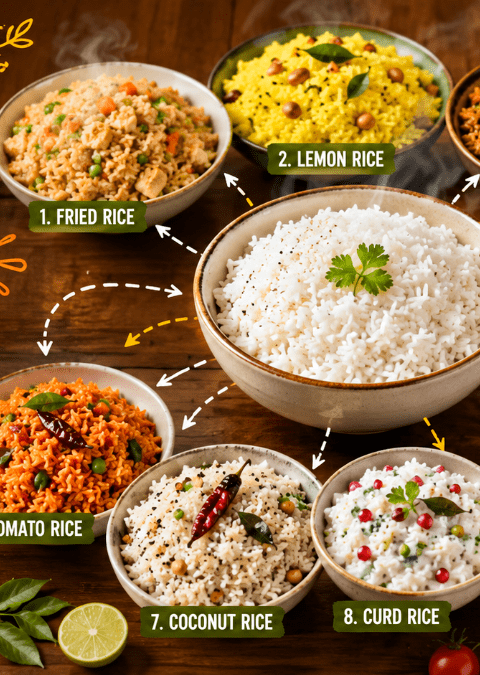
- Make extra rice and turn leftovers into lemon rice or fried rice the next day.
- Use leftover dal to prepare dal paratha or add vegetables to turn it into sambar.
2. Buy Seasonal and Local Produce
Seasonal fruits and vegetables are always cheaper and fresher. They also taste better and require fewer preservatives.
Budget-friendly choices this week:
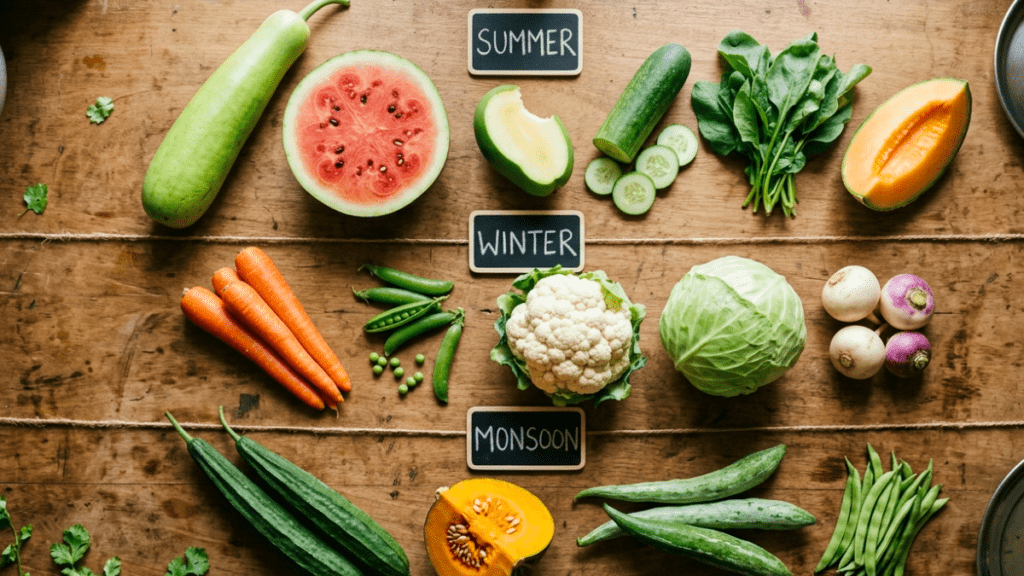
- Summer: Bottle gourd, cucumber, watermelon, Raw mango, Spinach, Muskmelon
- Winter: carrots, cabbage, peas, Cauliflower, Turnip
- Monsoon: ridge gourd, pumpkin, Snake gourd, Cluster beans
Benefits:
- Lower cost due to high supply
- Better nutritional value
- Supports local farmers
- Fresher and better in taste
Avoid buying exotic or imported produce regularly, as they can quickly increase your grocery expenses.
3. Use Staples Smartly (Dal, Rice, Atta)
Indian kitchens are built on staples like rice, lentils, and wheat. Using them creatively can stretch your budget without reducing meal variety.
Smart ideas:
- Turn leftover dal into dal paratha dough
- Use extra rice for lemon rice or fried rice
- Mix different dals to create nutritious, cost-effective meals
Pro tip:
Buying staples in bulk (monthly rather than weekly) often significantly reduces costs.
4. Reduce Food Waste with Simple Hacks
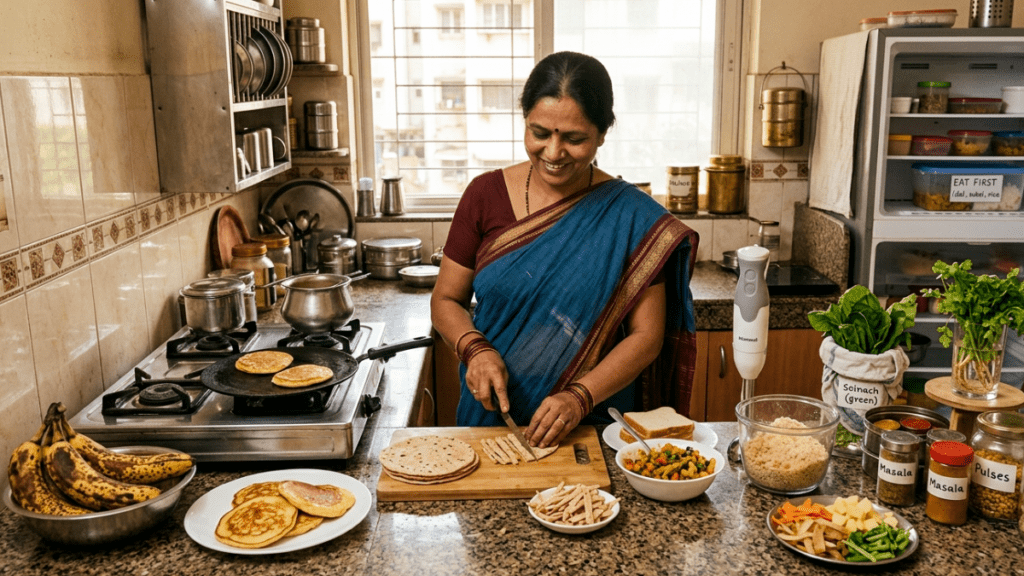
Food waste is one of the biggest hidden expenses in Indian kitchens. Small changes can lead to big savings.
Practical tips:
- Store vegetables properly (leafy greens in cloth, not plastic)
- Use vegetable peels for chutneys or stocks
- Freeze leftover curry instead of discarding it
- Keep an “eat first” box in your fridge for items that may spoil soon.
- Store herbs like coriander with stems in water to extend freshness
Example:
- Overripe bananas can be used for banana pancakes or smoothies instead of throwing them away.
- Leftover chapatis can be cut into strips for roti upma or quick snacks
- Extra cooked vegetables can be used as stuffing for sandwiches or wraps
- Stale bread can be turned into breadcrumbs or bread upma
5. Cook Once, Eat Twice
Batch cooking is a powerful method for saving both time and money.
How it works:
- Prepare a base gravy and use it for multiple dishes
- Cook extra sabzi and repurpose it the next day
- Make large portions of curries that store well
Example:
A simple tomato-onion gravy can be used for:
- Paneer curry
- Egg masala
- Mixed vegetable curry
This reduces both cooking time and ingredient costs.
6. Limit Packaged and Processed Foods
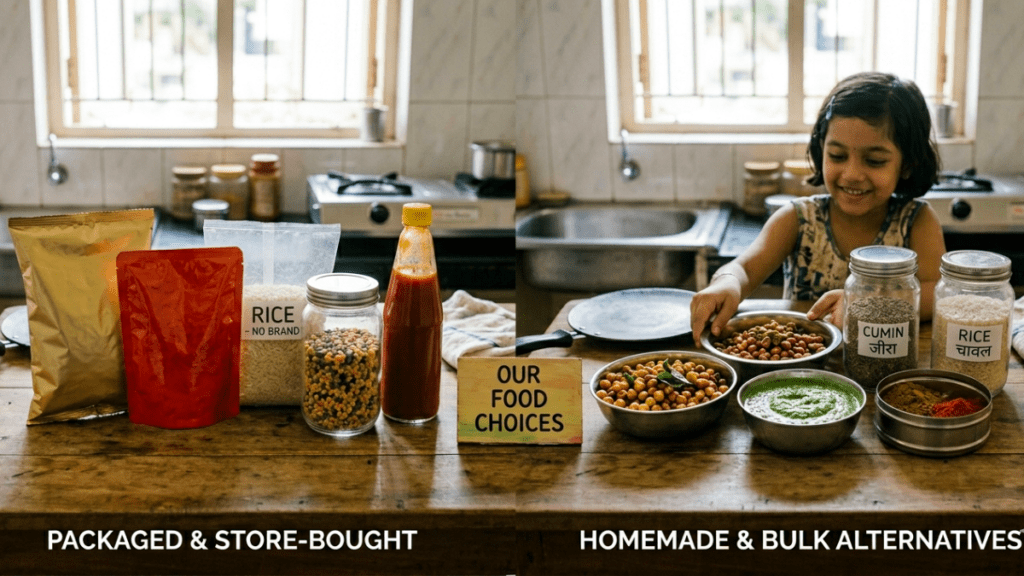
Ready-to-eat and packaged foods may seem convenient, but they are often expensive and less healthy.
Replace with:
- Homemade snacks like roasted chana or peanuts
- Fresh chutneys instead of bottled sauces
- Homemade masala mixes
Why it matters: You pay more for branding and packaging, not just the food itself.
7. Smart Protein Choices on a Budget
Protein is essential, but it doesn’t have to be expensive.
Affordable protein sources:
- Lentils (dal)
- Chickpeas (chana)
- Eggs
- Peanuts
- Curd
Budget tip:
Plan “vegetarian protein days” during the week to reduce costs while maintaining nutrition.
8. Use Leftovers Creatively
Leftovers don’t have to be boring; they can be transformed into entirely new meals.
Ideas:
- Roti → noodles or rolls
- Rice → curd rice or pulao
- Cooked vegetables → sandwich filling or paratha stuffing
This not only saves money but also reduces cooking effort.
9. Cook at Home More Often
Ordering food online or eating out frequently can quickly drain your budget.
Simple comparison:
- Home-cooked meal for 4: ₹150 to ₹250
- Restaurant/order: ₹500 to ₹1000+
Cooking at home gives you:
- Better portion control
- Healthier ingredients
- Significant savings over time
10. Track Your Kitchen Expenses
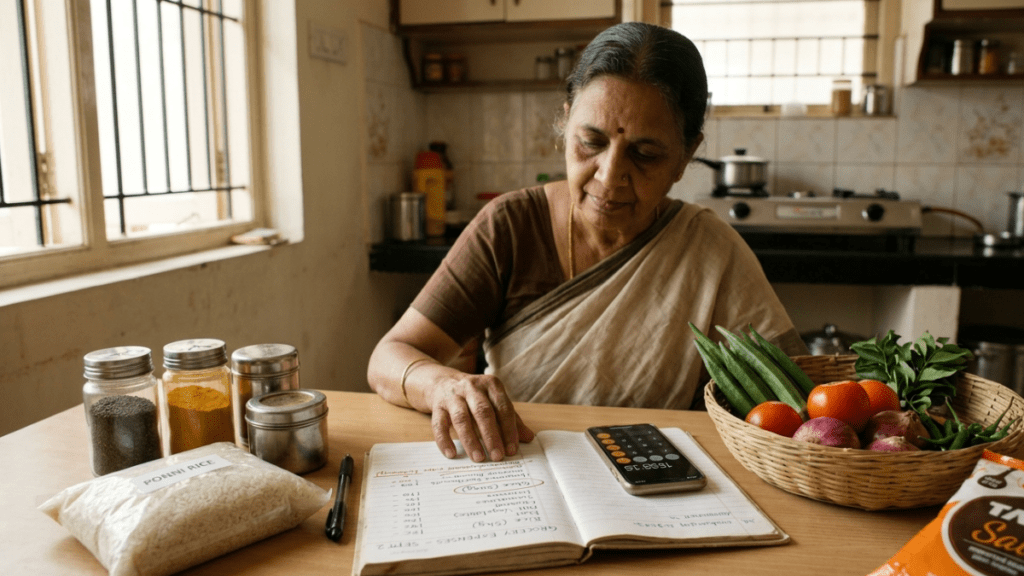
Most families underestimate how much they spend on groceries.
What to do:
- Maintain a weekly expense list
- Note high-cost items
- Identify unnecessary purchases
Result:
You’ll quickly spot patterns and adjust your buying habits.
Sample Budget Meal Plan (1 Week)
Here’s a simple example to help you get started:
Breakfasts:
- Poha
- Idli or Dosa with chutney
- Vegetable upma
- Paratha with curd
Lunch:
- Sambar + rice + sabzi
- Curd rice
- Lemon rice
- Variety rice
- Vegetable pulao
Dinner:
- Khichdi
- Egg curry + roti / Idli / Dosa
- Leftover-based dishes
- Chapati + seasonal vegetable
- Pongal
This type of rotation ensures variety without increasing costs.
Common Mistakes to Avoid
Even with good intentions, some habits can increase your kitchen budget:
- Buying groceries without a list
- Overstocking perishable items
- Ignoring leftovers
- Choosing branded items over local alternatives unnecessarily
Avoiding these mistakes can instantly improve your budget efficiency.
Smart Kitchen Mindset for Families
Budget cooking is not just about saving money; it’s about building a sustainable lifestyle.
Teach family members:
- Respect for food
- Importance of reducing waste
- Value of home-cooked meals
Involving children in simple cooking tasks can also help them understand the effort that goes into meals and reduce wastage.
Budget cooking in Indian households is all about balance between cost, nutrition, and taste. With a little planning, creativity, and awareness, you can transform your kitchen into a smart, efficient space that delivers healthy meals without overspending.
This week, start small:
- Plan your meals
- Use what you already have
- Avoid unnecessary purchases
Over time, these habits will not only save money but also make your cooking routine more enjoyable and stress-free.
A smart kitchen isn’t about spending less; it’s about spending wisely.