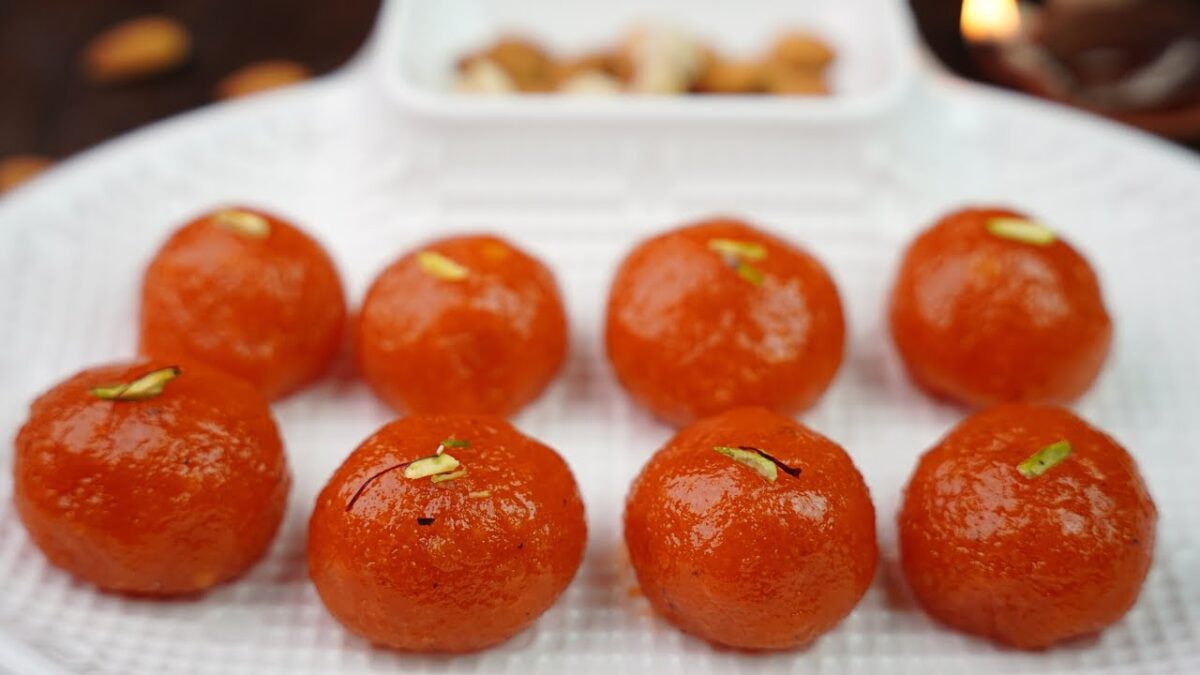
Diwali is one of my favourite occasions to prepare homemade sweets, and ladoo is a classic choice for the celebration. This Diwali special Motichur Laddu Recipe uses besan flour, sugar, water, ghee, and cardamom powder to make sweet, round ladoos at home. This is also called Motichoor Ladoo, Boondi Ladoo, and Besan Ladoo.
When I prepare a laddu recipe, I pay special attention to the boondi texture and sugar syrup consistency. These two things make a big difference in how well the ladoos hold their shape. If the boondi is too large or the syrup is too thin, shaping the ladoos can become difficult.
For this recipe, I make boondi from kadala maavu, also known as besan or gram flour. I fry it in oil until it turns light golden, then coarsely pulse it to help the mixture bind. I prepare a thick sugar syrup, add ghee and cardamom powder, and mix in the boondi before shaping the ladoos by hand.
You can prepare these homemade Boondi Ladoos for Diwali, family gatherings, festivals, or whenever you want to make a traditional Indian sweet at home. Follow the steps below, and pay attention to the texture at each stage for better results.
Why You Will Love This Motichur Laddu Recipe
- Made with simple ingredients: You need besan flour, sugar, water, oil, ghee, cardamom powder, and orange food colouring.
- Perfect for Diwali: These homemade ladoos are suitable for festive sweet boxes, family celebrations, and sharing with guests.
- Easy-to-follow method: Each step explains what to look for while preparing the boondi, sugar syrup, and ladoo mixture.
- Customisable texture: You can use small boondi directly or pulse larger boondi coarsely before shaping.
- Traditional flavour: Cardamom powder and ghee give the ladoos their familiar Indian sweet flavour.
- Make-ahead friendly: You can prepare these ladoos before your celebration and store them in an airtight container.
Motichur Laddu Recipe Ingredients
Here is everything you need to prepare this special ladoo recipe.
Besan flour: Kadala maavu or gram flour is the main ingredient. A smooth batter helps you make evenly sized boondi.
Oil: Use enough oil to fry the boondi evenly.
Sugar: Sugar provides sweetness and helps bind the boondi together. You will dissolve it in water and cook it until the syrup becomes thick and sticky.
Ghee: Adds flavour and helps give the ladoos a rich taste. It also helps when you shape the mixture by hand.
Cardamom powder: Cardamom powder gives the ladoos a warm, aromatic flavour. Add it to the sugar syrup before mixing in the boondi.
Orange food colouring: Gives the ladoos a festive appearance. Add a small quantity and adjust the colour according to your preference. You can skip it if you prefer naturally coloured ladoos.
Ingredient Substitutions for Motichur Laddu Recipe
Orange food colouring: Skip it or use a suitable food-grade alternative according to its instructions.
Ghee: You can omit it if necessary, although the flavour and texture will be different. Ghee is also useful for greasing your hands.
Cardamom powder: Use a small amount of freshly crushed cardamom seeds if you do not have ready-made powder.
Besan flour: Use plain, finely ground gram flour. Do not replace it with wheat flour, as the texture and flavour will change significantly.
Sugar: Regular white sugar works well for this recipe. Changing the type of sweetener may affect the syrup consistency and binding.
How to make Motichoor ladoo step by step?
Step 1: Prepare the besan batter
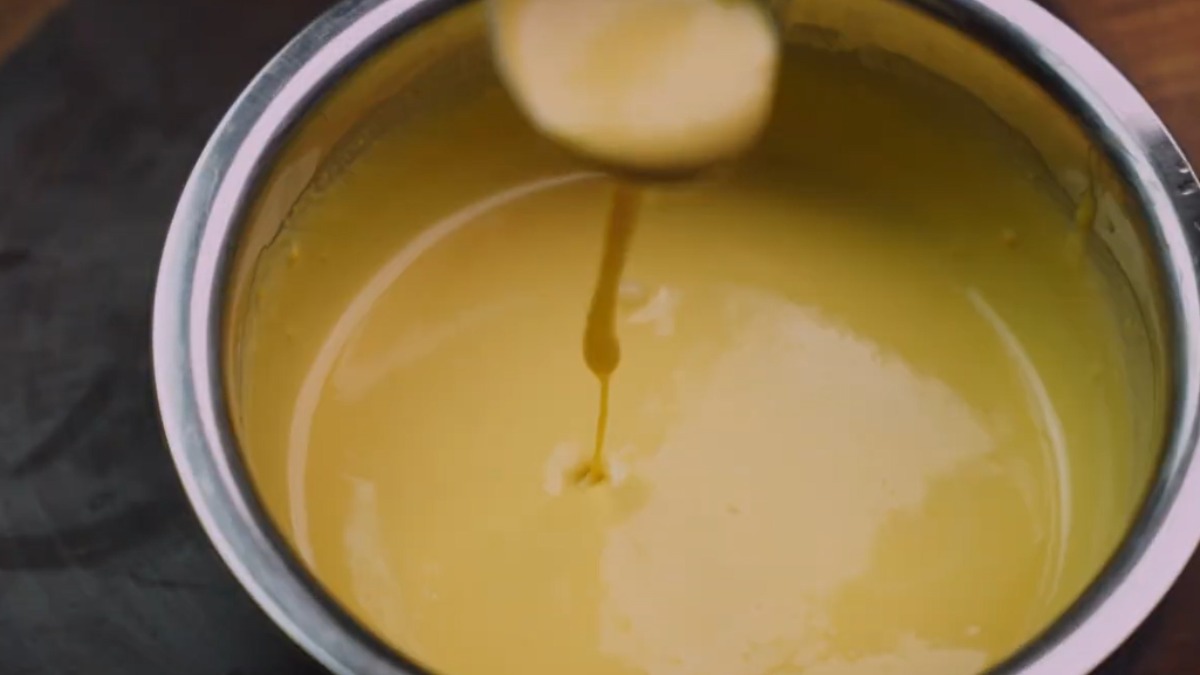
Take 1½ cups of besan flour in a large mixing bowl. Mix the flour thoroughly to remove any lumps.
Add water little by little while mixing continuously. Make sure the batter becomes smooth before adding more water.
The batter should be pourable and flow through a boondi ladle. If it is too thick, the boondi may turn out large or irregular. If it is too thin, the boondi may become too small or lose its shape.
Step 2: Heat the oil
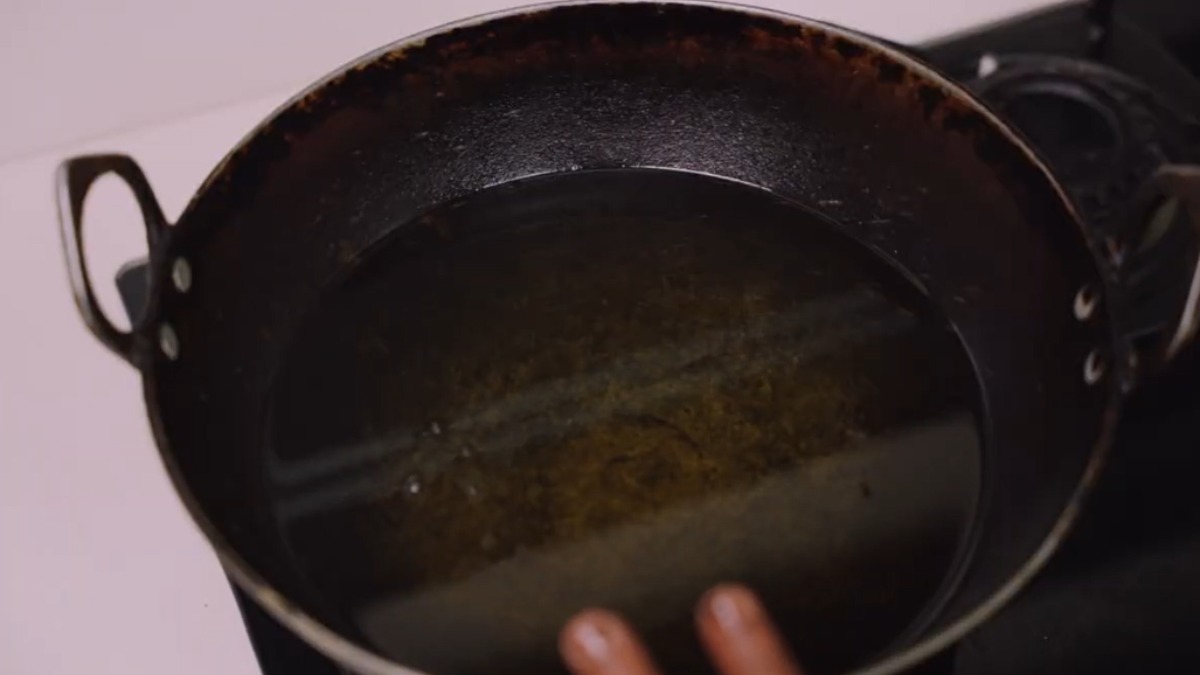
Pour oil into a deep, heavy-bottomed kadai or frying pan. Heat it over medium heat.
To check whether the oil is ready, drop a tiny amount of batter into it. The batter should rise and begin frying without immediately turning dark.
Avoid overheating the oil because the boondi can brown too quickly before frying evenly.
Step 3: Fry the boondi
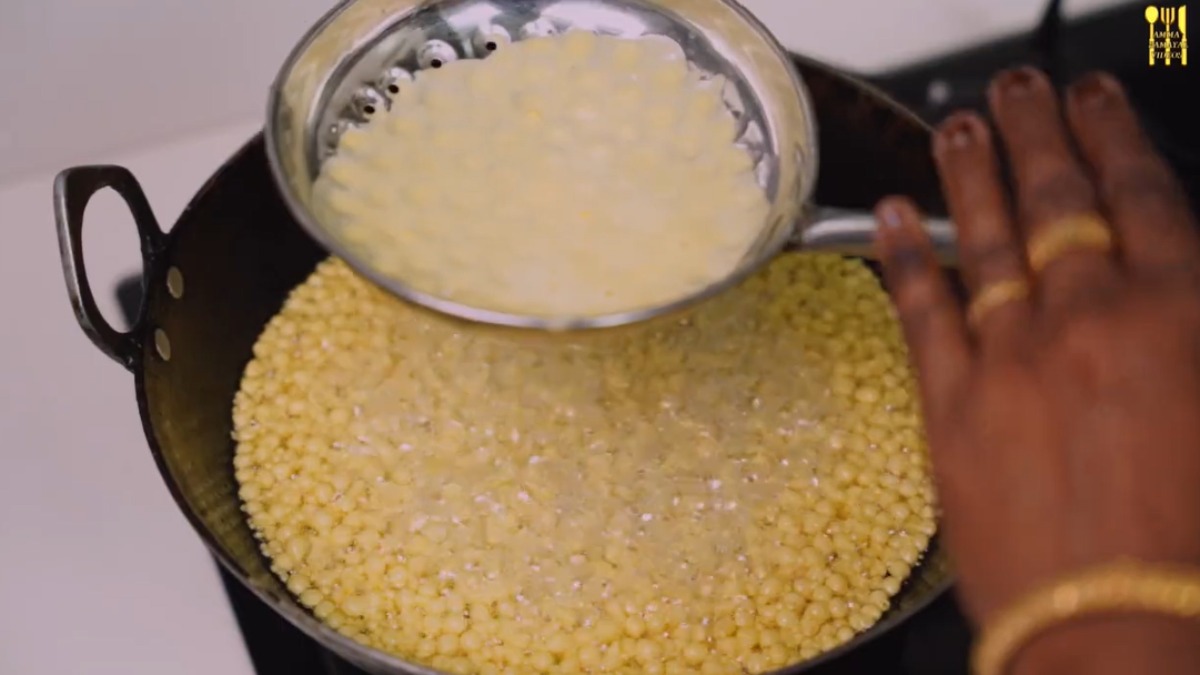
Hold a perforated boondi ladle over the hot oil. Pour a small amount of batter onto the ladle and gently spread it so the batter falls through the holes.
Fry the boondi until it becomes light golden. Stir gently if needed to cook it evenly.
Remove the fried boondi with a slotted spoon and drain the excess oil. Repeat with the remaining batter.
Allow the oil to return to a suitable temperature between batches. Clean the boondi ladle if the batter begins sticking to its holes.
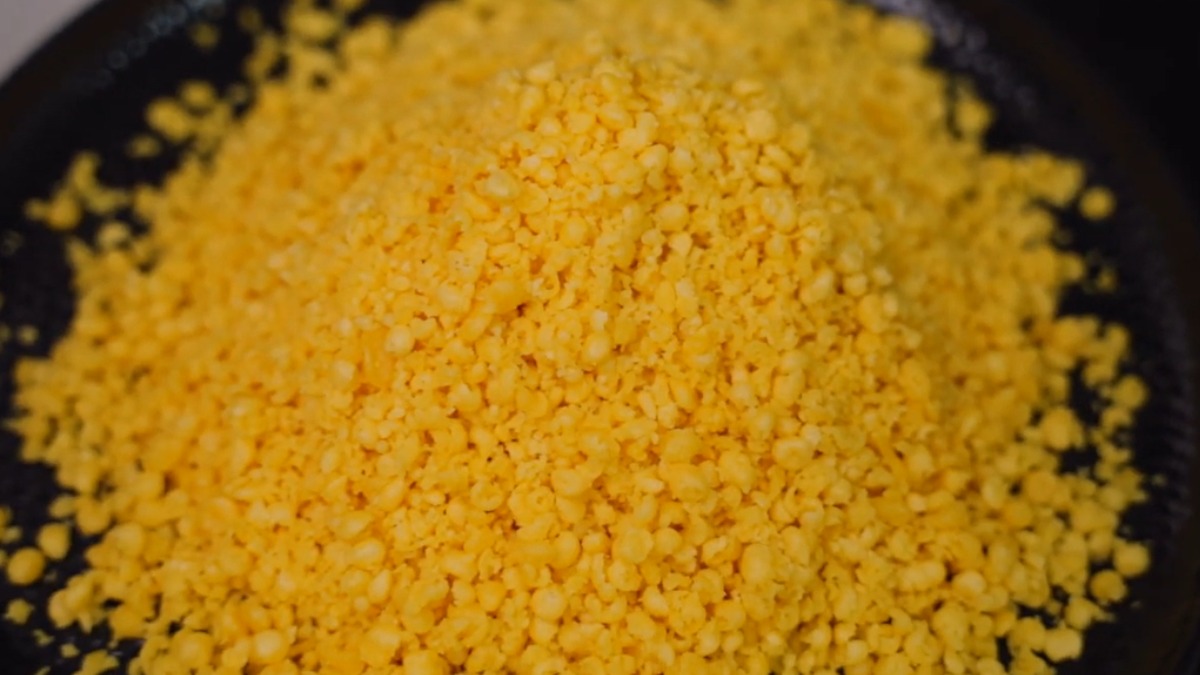
Step 4: Pulse the boondi if needed
Check the size of the fried boondi. If the pieces are small enough to bind easily, you can use them directly.
If the boondi is large or difficult to shape, transfer it to a mixer jar and pulse it briefly. Use short pulses to break it into smaller pieces.
Do not grind it into a fine powder. A coarse texture gives the ladoos some body and helps you shape them without losing the characteristic boondi texture.
Step 5: Prepare the sugar syrup
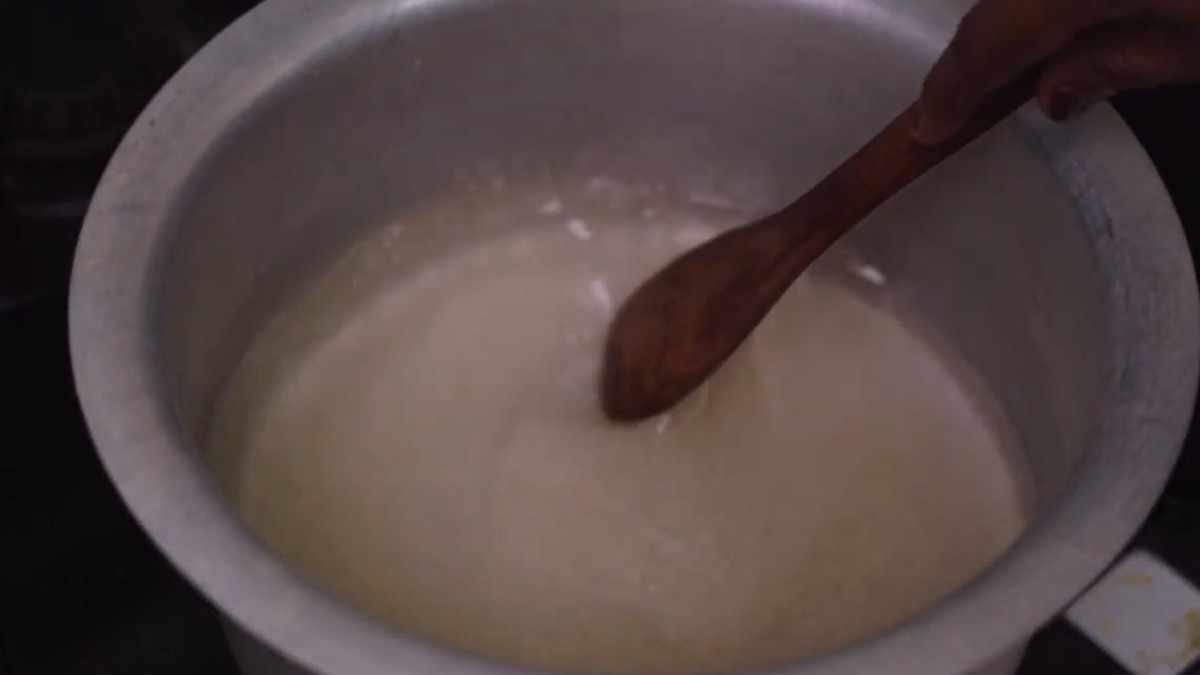
Take a heavy-bottomed vessel and add 2 cups of sugar and 1¼ cups of water.
Heat the mixture over a low flame, stirring until the sugar dissolves completely. Continue cooking until the syrup thickens and becomes sticky.
For better binding, check the syrup carefully. A small drop cooled between your fingers should feel sticky. If you are familiar with sugar syrup stages, aim for a light one-string consistency rather than a watery syrup.
Be careful when testing hot sugar syrup because it can cause burns. Allow a tiny drop to cool before touching it.
Step 6: Add the flavourings
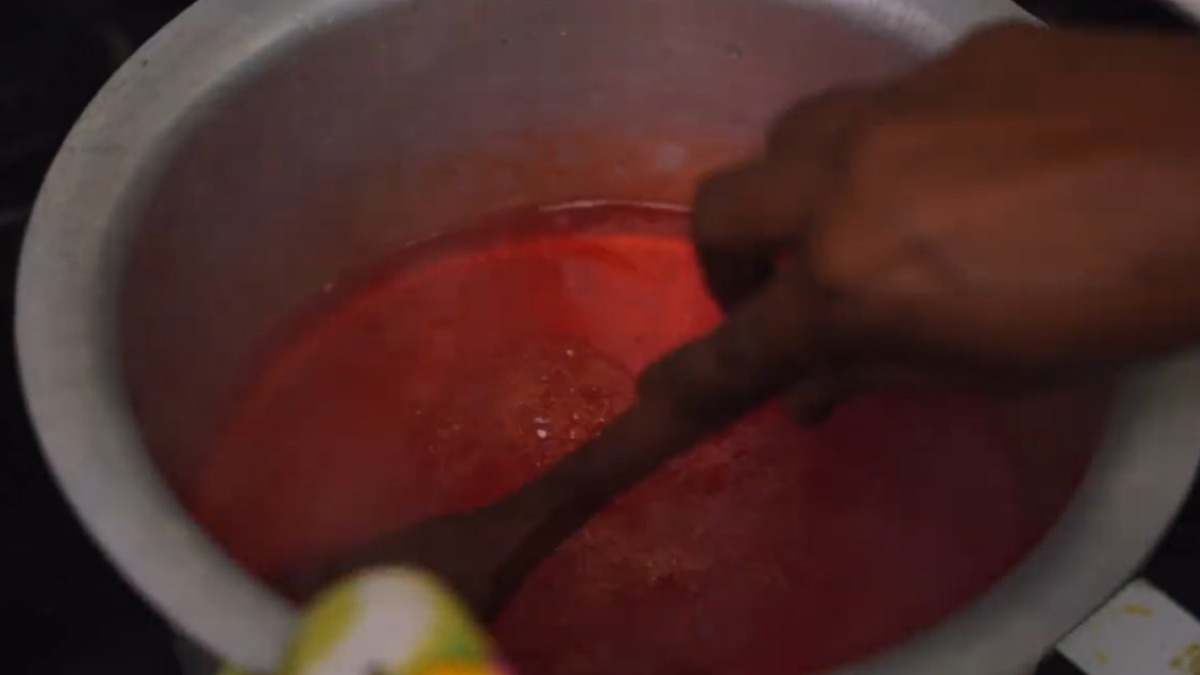
Add a small amount of orange food colouring, 2 tablespoons of ghee, and ¼ teaspoon of cardamom powder to the syrup.
Mix well over low heat for about 3 minutes, or until the ingredients are evenly combined.
Keep the flame low so the syrup does not thicken too much before you add the boondi.
Step 7: Mix in the boondi
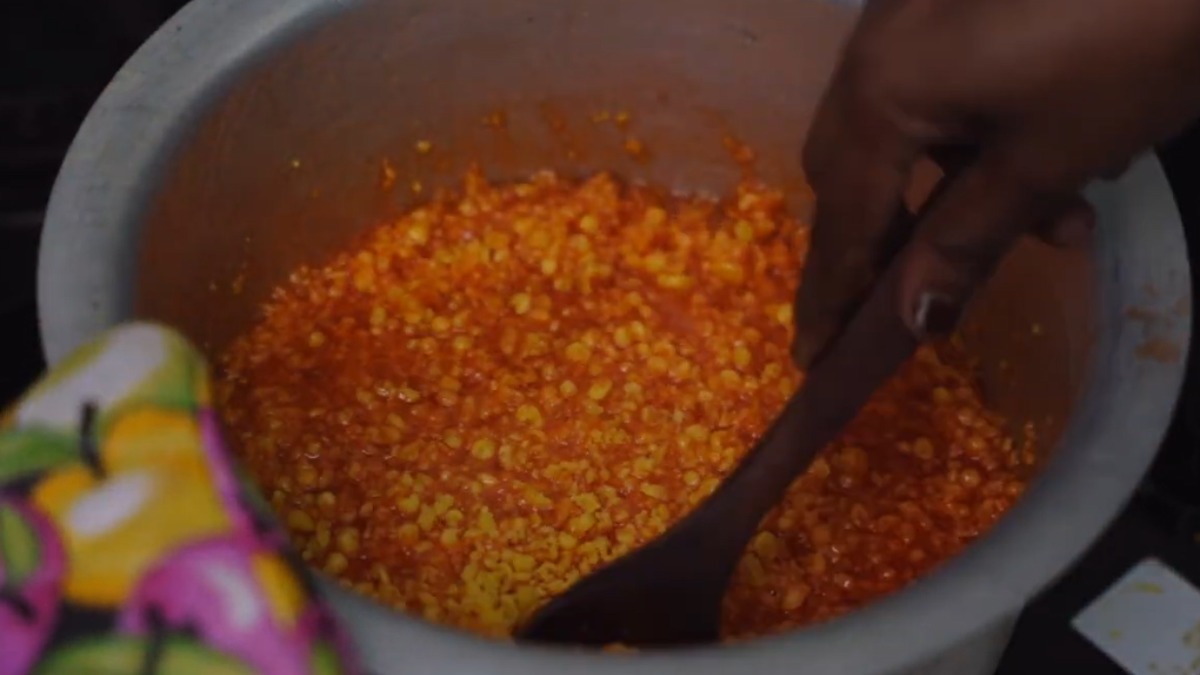
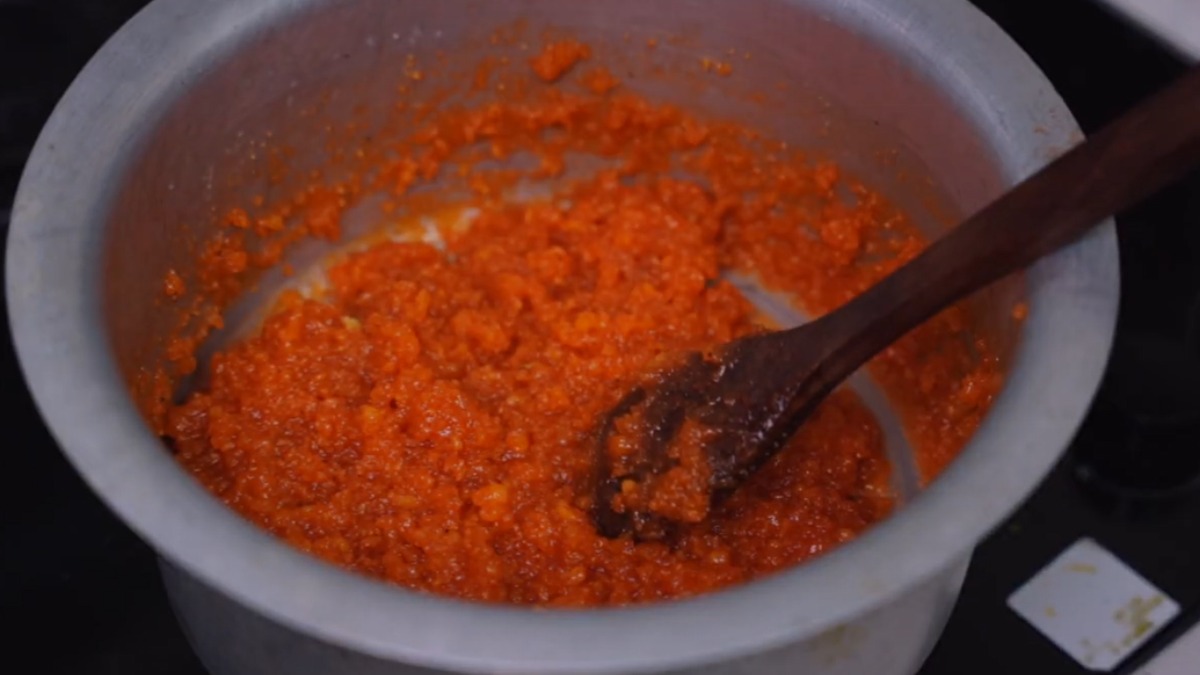
Add the prepared boondi to the sugar syrup. Mix thoroughly for 5 to 6 minutes over low heat so the syrup coats the pieces evenly.
Break up any large clumps with a spoon, and make sure no dry portions of boondi are left in the vessel.
The mixture should look moist and sticky. If it becomes too dry before you can shape the ladoos, the syrup may have been cooked too far. If it remains very loose, it may need more time to absorb the syrup and cool.
Step 8: Cool the mixture slightly
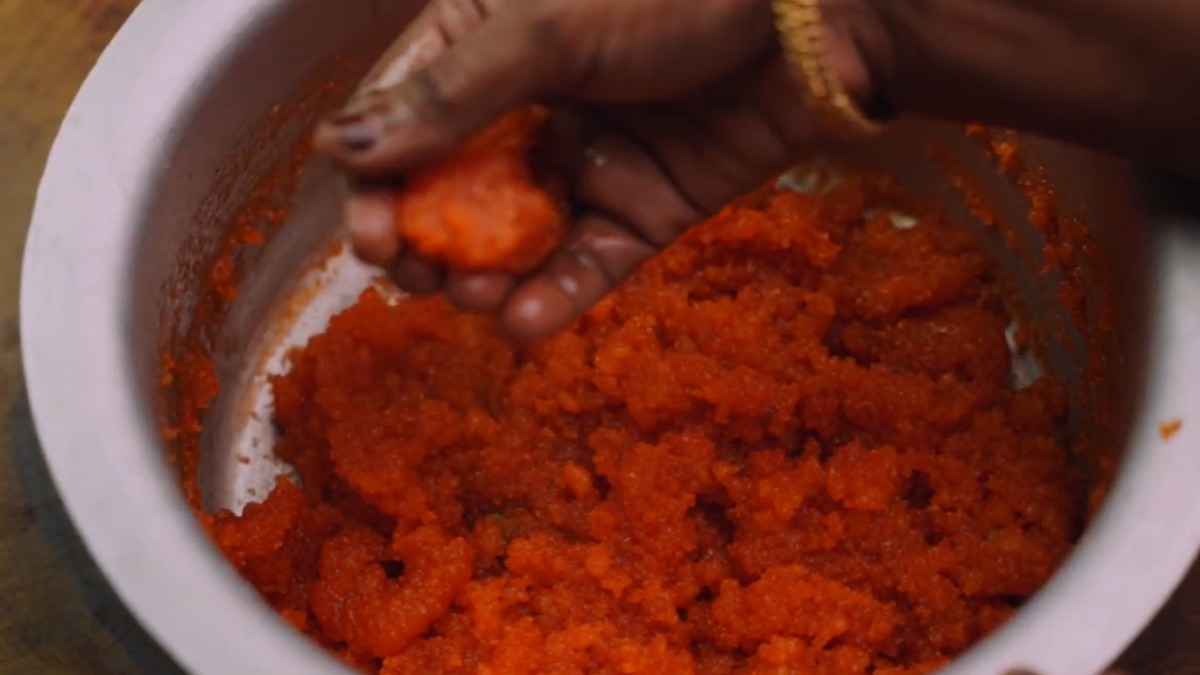
Turn off the heat and let the boondi mixture cool until it is warm enough to handle.
Do not wait until it becomes completely cold and hard. A warm mixture is usually easier to shape because the syrup remains soft enough to bind the boondi.
If the mixture feels too hot, let it cool for a little longer before handling.
Step 9: Shape the ladoos
Apply a little ghee to your palms. Take a small portion of the warm boondi mixture and press it gently between your hands.
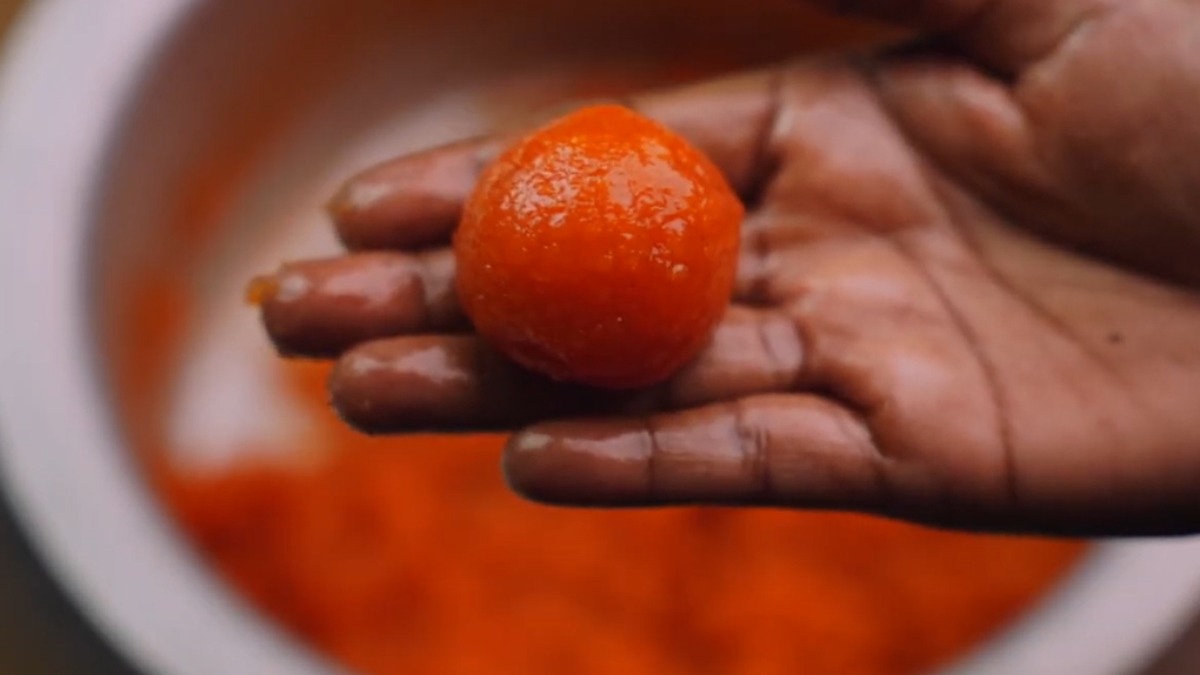
Rotate your palms to form a round ladoo. Apply even pressure so the mixture holds together without crushing it too much.
Repeat with the remaining mixture. If the mixture starts sticking to your hands, grease your palms lightly again.
Allow the ladoos to cool completely before transferring them to a storage container.
To know laddu seivathu eppadi in Tamil
Expert Tips for Perfect Motichur Laddu Recipe
- Get the batter consistency right. A smooth, pourable batter helps create evenly sized boondi.
- Maintain the oil temperature. Oil that is too hot can brown the boondi quickly. Oil that is not hot enough can make it absorb excess oil.
- Fry in small batches. Overcrowding the kadai can lower the oil temperature and lead to uneven frying.
- Pulse carefully. If you grind the boondi too finely, the ladoos may lose their texture. Use short pulses.
- Watch the sugar syrup. A watery syrup may not bind the mixture well. An overly thick syrup can make the ladoos dry and difficult to shape.
- Shape while the mixture is warm. If it cools completely, the sugar can harden and make shaping difficult.
- Use ghee sparingly on your hands. A thin coating makes shaping easier without making the ladoos greasy.
- Allow the ladoos to set. Let them cool completely before storing them.
Common Mistakes to Avoid
Making the batter too thick: Thick batter may not pass smoothly through the boondi ladle. Add water gradually until it reaches a pourable consistency.
Frying the boondi until it becomes too dark: Dark boondi can taste over-fried and may produce a different texture. Aim for light golden boondi and avoid leaving it in the oil for too long.
Grinding the boondi into a powder: Fine powder can make the ladoos dense and pasty. Pulse only until the pieces become smaller and easier to bind.
Adding boondi to watery syrup: If the syrup is too thin, the ladoos may fall apart when you shape them. Cook the syrup until it becomes thick and sticky before adding the boondi.
Cooking the mixture for too long: Excessive cooking can dry out the mixture and make it difficult to form round ladoos. Keep the flame low and monitor the texture.
Shaping the mixture after it has cooled completely: The syrup can harden as the mixture cools. Shape the ladoos while the mixture is still warm enough to handle safely.
Serving Suggestions
Serve boondi ladoo as a festive dessert after lunch or dinner. These sweets are also suitable for Diwali celebrations, family gatherings, poojas like Ganesh Chaturthi, and homemade sweet boxes.
You can serve them with other traditional Indian sweets and savoury snacks when preparing a festive spread. Arrange the ladoos in small paper cups for a neat presentation.
For gifting, allow the ladoos to cool completely before packing them. Use a clean, dry container and keep the sweets protected from moisture.
How to Store Motichur Laddu Recipe
Allow the ladoos to cool completely before storing them in an airtight container. Moisture trapped inside the container can affect their texture and keeping quality.
- At room temperature: Store in a cool, dry place away from direct sunlight and heat. For the best quality, consume within a few days, especially in hot or humid weather.
- In the refrigerator: Refrigeration can help when your kitchen is very warm, but it may make the sugar syrup firmer. Keep the ladoos in an airtight container.
- Before serving: If refrigerated, allow the ladoos to sit briefly at room temperature so their texture softens slightly.
The actual shelf life depends on the moisture level, handling, storage temperature, and cleanliness of your utensils. Discard the ladoos if you notice mould, an unusual smell, or other signs of spoilage.
Frequently Asked Questions
What is motichoor ladoo made of?
Ladoo is made using small fried droplets of besan flour batter, sugar syrup, ghee, and flavourings such as cardamom. Some versions also include nuts, raisins, or food colour.
Why are my ladoos not holding their shape?
The syrup may be too thin, or the boondi may not have absorbed enough syrup. The mixture may also be too cool when you try to shape it. Check the syrup consistency and shape the mixture while it is still warm.
Why did my ladoos become hard?
The sugar syrup may have been cooked too far, or the mixture may have dried out before shaping. Cook the syrup carefully, mix the boondi over low heat, and shape the ladoos while the mixture is warm.
Can I make ladoo ahead of Diwali?
Yes. You can prepare them ahead of your celebration. Cool them completely and store them in an airtight container in a cool, dry place.
Can I use jaggery instead of sugar?
You can experiment with jaggery, but it changes the flavour, colour, and binding properties of the mixture. The syrup may require adjustments, so the result will not be the same as this sugar-based boondi ladoo recipe.
How do I know when the sugar syrup is ready?
The syrup should be thick and sticky rather than watery. For a firmer bind, cooks often use a light one-string consistency. If you are new to making sugar syrup, watch its texture closely and avoid overcooking it.
Why is my ladoo mixture too dry?
The syrup may have become too thick, or the mixture may have been heated for too long. Work quickly once the boondi is coated, and shape it before the mixture cools and hardens.
Ladoo
Ingredients
Instructions
- Add besan flour to a bowl and mix well to remove lumps.
- Add water gradually and prepare a smooth, pourable batter.
- Heat oil in a deep kadai over medium heat.
- Pour the batter through a perforated boondi ladle and fry the boondi until light golden.
- Drain the boondi and pulse it coarsely if the pieces are too large.
- Combine sugar and 1¼ cups water in a vessel. Cook until the sugar dissolves and the syrup thickens and becomes sticky.
- Add orange food colouring, ghee, and cardamom powder. Mix well.
- Add the boondi and mix over low heat for 5 to 6 minutes.
- Turn off the heat and allow the mixture to cool until it is warm enough to handle.
- Grease your palms lightly with ghee. Take small portions and shape them into round ladoos.
- Let the ladoos cool completely before storing them in an airtight container.
Notes
- Add water gradually when preparing the batter.
Pulse the boondi only if needed.
Avoid overcooking the sugar syrup.
Shape the ladoos while the mixture is warm.
Store in a clean, dry, airtight container.
You may also like